
Defensible Space Is Failing Because It's Being Designed by Fear, Not by Water
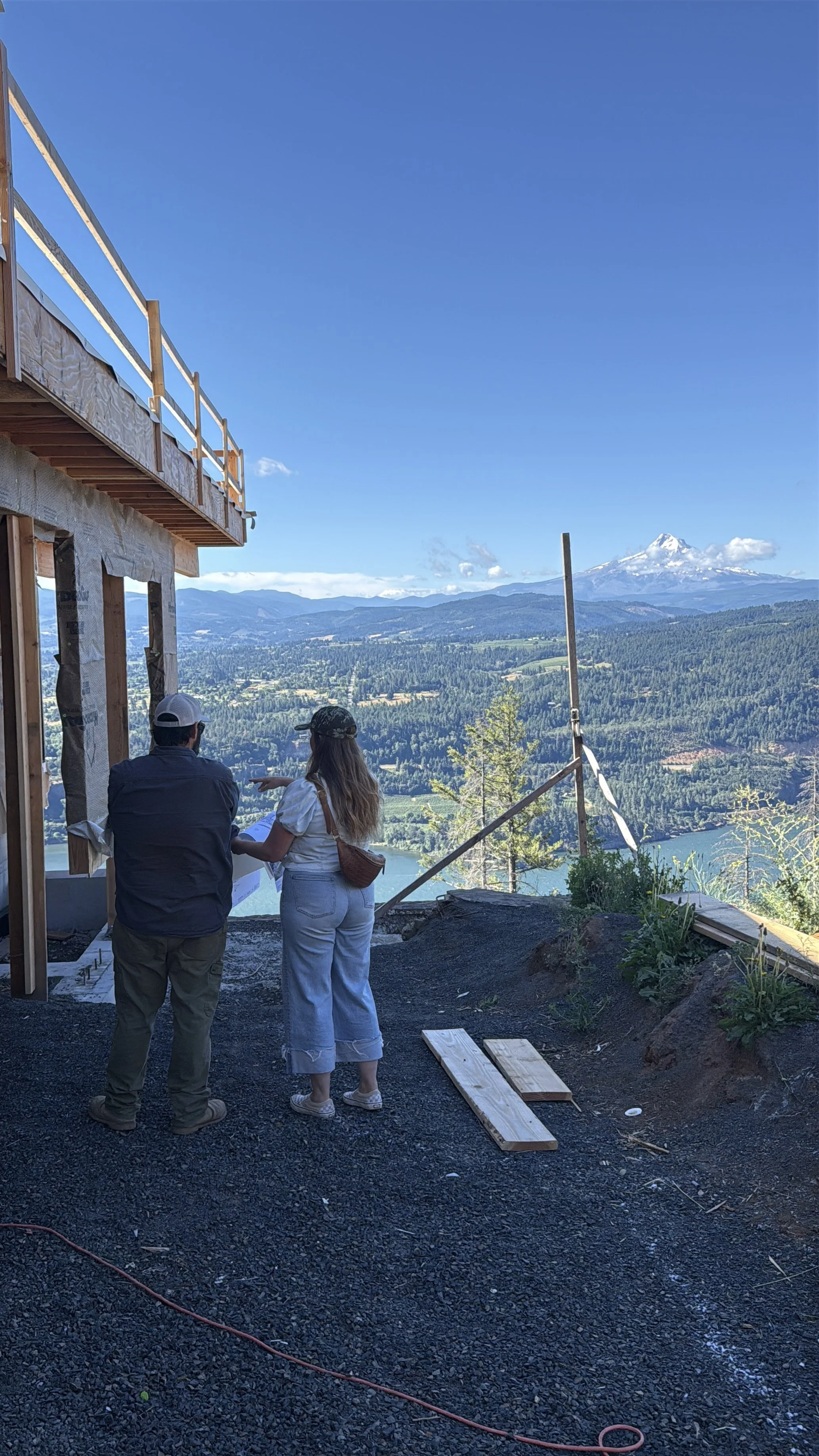
Oregon broke its own wildfire acreage record this year. Washington had its most destructive fire season on record. If you're a PNW homeowner, you've been told, correctly, that you need defensible space. What you probably haven't been told is that most defensible space advice is bad landscape design, and bad landscape design creates its own problems.
We see it constantly. A homeowner gets a wildfire consultation, gets told to clear everything within five feet of the house, and ends up with a barren gravel moat around their foundation. It satisfies the fire checklist. It fails as a landscape. And in a lot of cases, it fails hydrologically too, because bare, compacted ground next to a foundation doesn't absorb water. It sheds it, right back toward the structure it was supposed to protect.
The fire risk and the water risk are not separate problems. They're the same site, and they need to be solved by the same design conversation.
What the Research Actually Says About Defensible Space
The data on defensible space effectiveness is strong, and it's worth being precise about it, because precision is exactly what's missing from most homeowner-facing content right now.
Syphard et al. analyzed over 2,000 structures in San Diego County and found that homes were significantly more likely to survive a wildfire with effective defensible space immediately adjacent to them. The most effective single actions: reducing woody vegetation cover by up to 40 percent right next to the structure, and making sure nothing overhangs or touches the building itself (IBHS Zone 0 whitepaper).
An analysis of aerial imagery and insurance claims data found that homes with heavy vegetation, more than 50 percent coverage within five feet, had nearly double the chance of total loss compared to homes with light vegetation density in that same zone (IBHS).
A December 2025 IBHS study went further and tested vegetation moisture directly. Even well-watered, healthy plants within the first five feet of a home, Zone 0, ignite and burn under the wind and heat conditions common in a suburban wildfire. Worse, the moisture just delays ignition long enough for the structure itself to preheat, making it more vulnerable once the vegetation does catch (IBHS, Vegetation in Zone 0).
The research is clear on the mechanism: embers, not walls of flame, are what ignite most homes, and they're doing it through combustible material within the first several feet of the structure (NFPA, Preparing Homes for Wildfire).
None of that is in dispute. What is very much in dispute, including in ongoing public debate in California over Zone 0 rulemaking, is what homeowners are supposed to do with that five-foot zone once the vegetation comes out (LA Times). And that's where most advice stops being useful.
Nobody Designs What Replaces the Vegetation
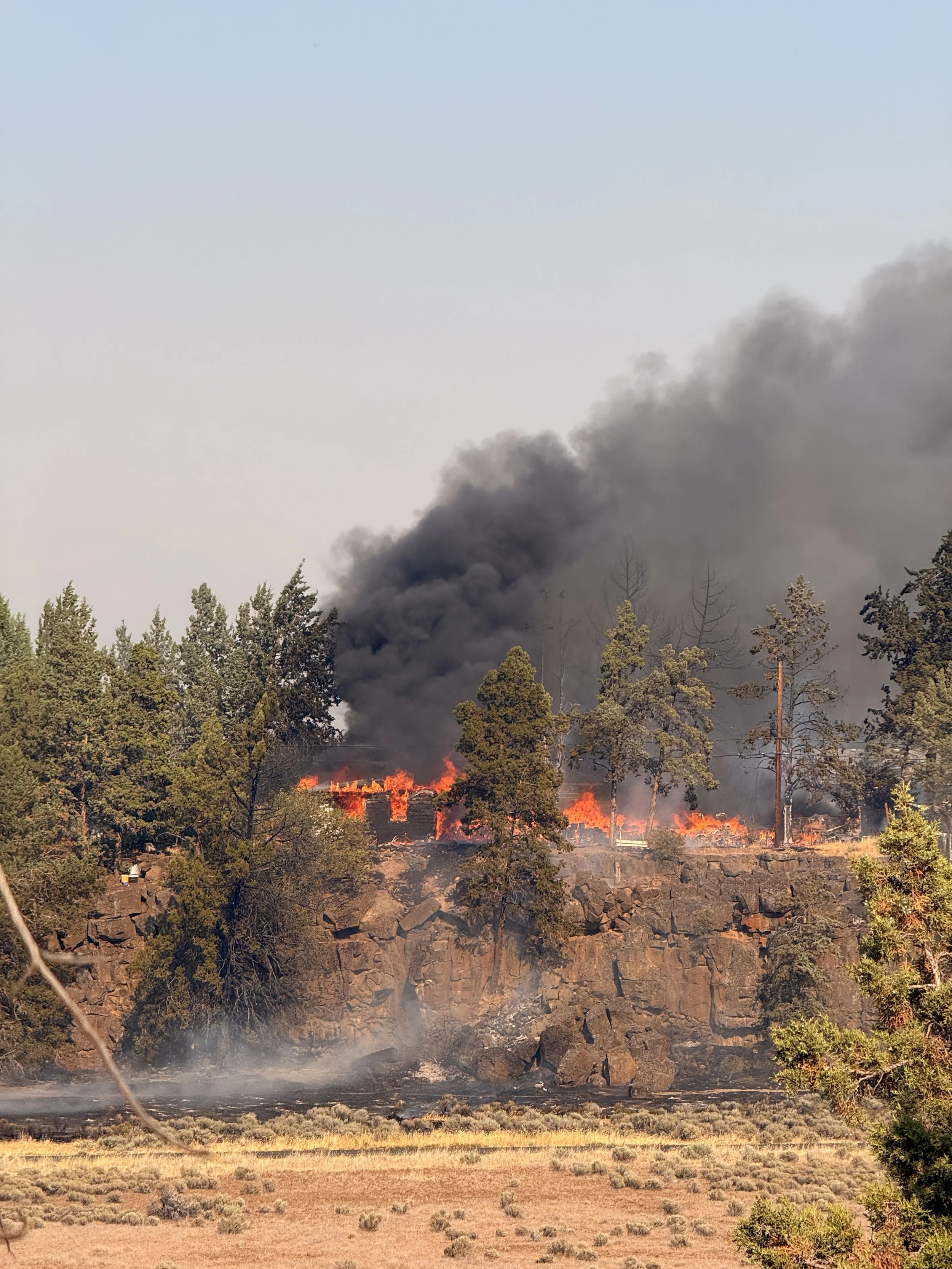
Fire agencies are right that Zone 0 needs to be ember-resistant. They are not landscape designers, and it shows. The default recommendation, gravel, gets you a technically compliant but ecologically and hydrologically dead strip around your foundation.
Here's what that gravel moat actually does to your property over the next decade:
It sheds every drop of rain that hits it, concentrating water flow at exactly the point where your foundation is most vulnerable to moisture damage.
It does nothing for the soil biology or infiltration capacity of the rest of your property.
It creates a visual dead zone against the house that most homeowners hate and eventually try to soften with plantings, often undoing the defensible space work in the process.
This is a design failure, not a fire safety failure. The fire science on keeping Zone 0 free of combustible material is sound. The landscape design applied to that constraint is usually an afterthought.
How We Actually Approach This
Water-first design means we ask two questions at the same time: where does this site need to shed embers, and where does this site need to absorb water. Those answers inform the same plan.
-
Noncombustible hardscape, permeable pavers or compacted gravel over a properly engineered base, not just loose rock dumped on grade. This keeps the ember-resistant requirement intact while still allowing some infiltration rather than pure runoff, and it's built to actually look intentional against the house.
-
his is where the real design opportunity lives. Low, well-spaced, well-irrigated plantings with high moisture content and open growth habits, not the dense woody shrubs that create fuel continuity. This zone can still do hydrological work: absorbing rainfall, supporting soil biology, and functioning as a real landscape rather than a buffer.
-
Managed spacing between tree canopies, removal of ladder fuels, and this is often exactly where a rain garden or bioswale belongs, positioned to capture roof and hardscape runoff while maintaining the canopy spacing that interrupts fire behavior.
The point is that defensible space, done with actual design intent, doesn't have to fight against your property's water management. It can be built to do both jobs on the same footprint.
Burnscar in the foothills
Why This Matters More This Year
With Oregon and Washington's wildfire hazard maps and vegetation rules still shifting, and insurers increasingly pulling their own data to make coverage decisions independent of state maps, homeowners are getting conflicting guidance and doing this work anxious and alone. That anxiety is producing exactly the kind of fear-based, checklist-only landscaping that creates the barren zones we're describing.
A defensible space plan built by someone who understands both wildfire science and site hydrology looks different from a compliance checklist. It should.
Complex sites, including wildfire-exposed ones, are our thing.
Free Resource
Download the Blueprint Earth Firewise Planting Guide formatted to print, save, and work from.
SOURCES
Syphard et al., cited in IBHS/BOF Zone Zero Whitepaper (2025). https://sntr.senate.ca.gov/system/files/2025-04/03-ibhs_bof_zonezero_whitepaper.pdf
IBHS Noncombustible Zone 0 report. https://hiddenvalleygranitebay.com/wp-content/uploads/2025/08/IBHS_Noncombustible_Zone_0.pdf
IBHS, Vegetation in Zone 0 (Dec 2025 study). https://ibhs.org/wildfire/vegetationinzone0/
NFPA, Preparing Homes for Wildfire. https://www.nfpa.org/education-and-research/wildfire/preparing-homes-for-wildfire
LA Times, How California's Zone Zero became plagued with controversy and delays (Nov 2025). https://www.latimes.com/environment/story/2025-11-03/how-zone-zero-became-plagued-with-controversy-and-delays
California State Board of Forestry and Fire Protection. Zone Zero Guidance Document: Guidance for Defensible Space Zones 0, 1, and 2. California Department of Forestry and Fire Protection, Sept. 2026, https://34c031f8-c9fd-4018-8c5a-4159cdff6b0d-cdn-endpoint.azureedge.net/-/media/bof-website/projects-and-programs/defensible-space-zones-0-1-2/zonezeroguidancedocseptember-final-2026.pdf.
Chulahwat, Akshat, and Hussam Mahmoud. "Optimal Interventions to Curb Urban Conflagration." Proceedings of the National Academy of Sciences, vol. 123, no. 26, June 2026, https://doi.org/10.1073/pnas.2612835123.
Baylis, Patrick, et al. "Incentivizing Self-Protection From Wildfires." National Bureau of Economic Research, Working Paper no. 35764, Sept. 2026, https://www.nber.org/papers/w35764.
Insurance Institute for Business & Home Safety, and American Property Casualty Insurance Association. "IBHS and APCIA Launch Comprehensive New Toolkit to Help Communities Reduce Wildfire Risk." Insurance Institute for Business & Home Safety, 25 Mar. 2026, https://ibhs.org/ibhs-news-releases/ibhs-and-apcia-launch-comprehensive-new-toolkit-to-help-communities-reduce-wildfire-risk/.
FAQ
Do I really need to remove all vegetation within 5 feet of my house?
The research strongly supports keeping Zone 0 free of combustible material, meaning no bark mulch, no wooden fencing, no dense shrubs touching the structure. That doesn't mean the zone has to be dead space. Noncombustible hardscape can be designed with the same intent as any other part of your landscape.
Isn't gravel around my foundation the easiest fix?
It's the easiest to install, not necessarily the best long-term choice. Loose gravel over bare compacted soil sheds water toward your foundation and offers nothing for the rest of your site's hydrology. A properly engineered permeable surface can meet the same fire code intent while managing water better.
What about the plants in Zone 1, the 5 to 30 foot ring?
This is where moisture-retentive, low, well-irrigated, open-structured plants matter most. Dense woody shrubs with heavy fuel load are the problem, not vegetation itself. Well-chosen and well-maintained plantings in this zone can still provide fire resilience.
Why are the state wildfire rules so confusing right now?
Oregon and Washington have both revised and, in some cases, repealed vegetation mandates after public pushback, while updated hazard maps are still being finalized. That's a policy and mapping problem, not a reason to skip good site-specific design. The underlying fire science on Zone 0 hasn't changed even while the regulatory rollout has been messy.
Can a rain garden work near my defensible space zones?
Yes, and it often should. Positioned in Zone 2 (30 to 100 feet from the structure) rather than right against the house, a rain garden can manage roof and hardscape runoff while the canopy spacing in that zone is doing its fire-interruption job. This is exactly the kind of dual-purpose design water-first thinking is built for.
How do I know what fire hazard zone my property falls into?
That's determined by your state's fire hazard severity mapping, which factors in fire history, terrain, and vegetation. Given how much these maps have been revised recently in Oregon and Washington, it's worth confirming your property's current designation directly with your state's forestry or emergency management agency rather than relying on older information.
Ready to talk about your site? Schedule a Garden Chat
Checkout the Land Language Podcast to learn from those changing the industry. Listen here
Join us for our upcoming speaking engagements Here