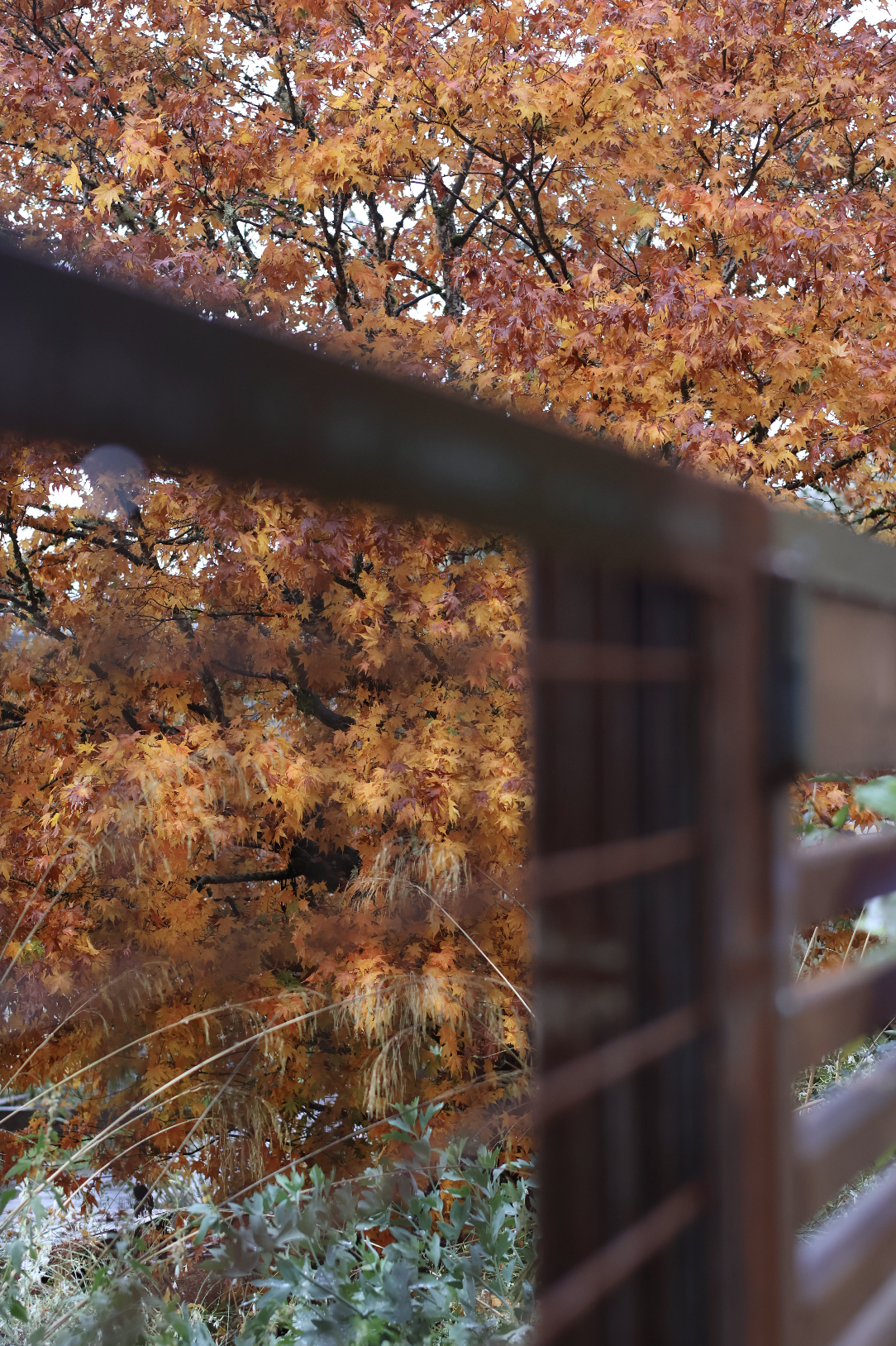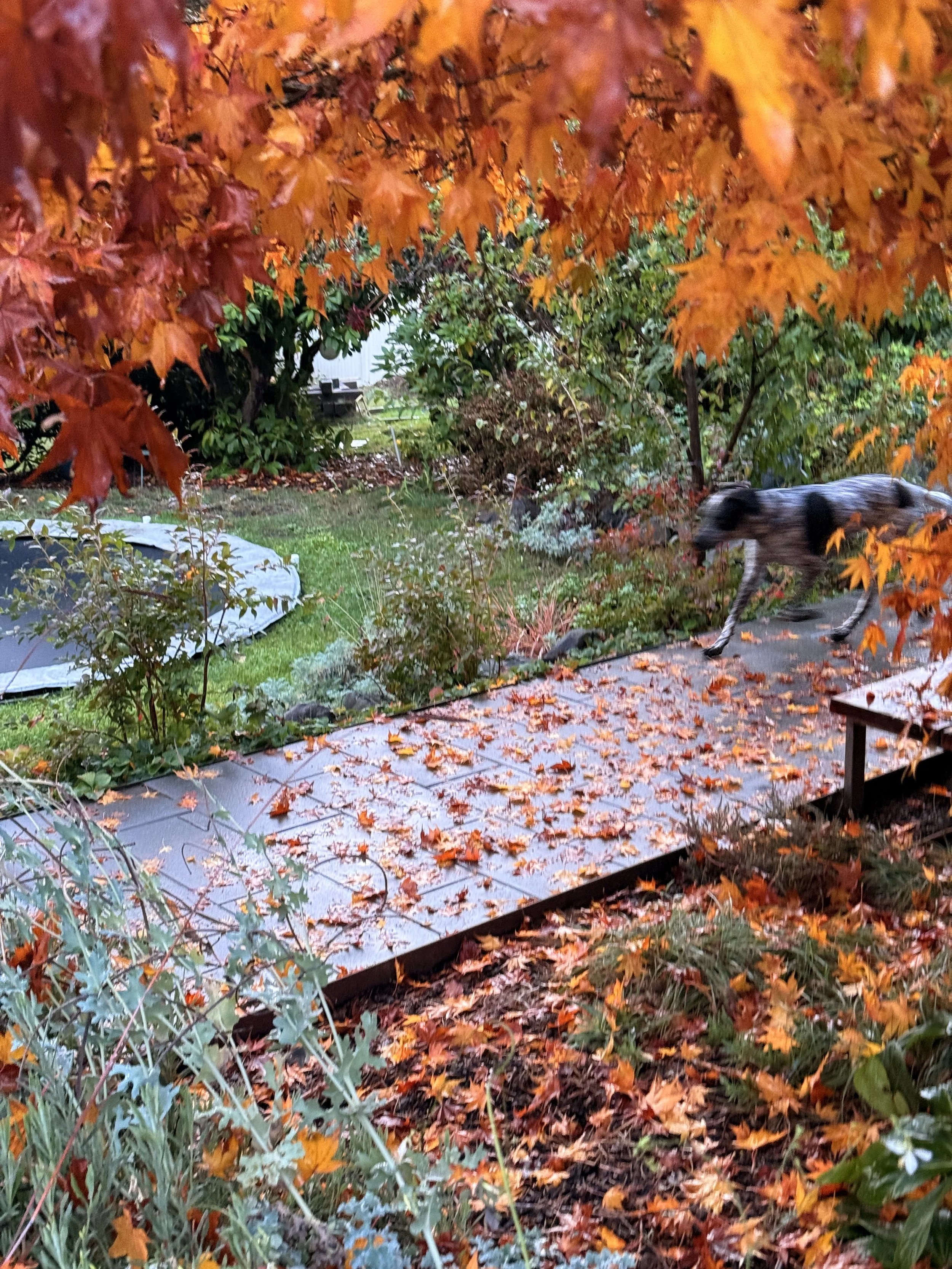
November in Portland brings that specific kind of rain that makes you question every life choice that led to you standing outside with a rake. The leaves are down. All of them. Your lawn looks like it's wearing a thick blanket, and your neighbors are out there with leaf blowers at 7 AM like it's some kind of emergency.
Here's what I want you to know: You don't need to rake everything. But you also shouldn't leave everything. Welcome to ecological gardening, where the answer to almost everything is "it depends."
The truth? Leaves are gold for your soil and essential habitat for overwintering wildlife. But a six-inch blanket of maple leaves smothering your perennials? That's not habitat. That's suffocation.
We need nuance. We need strategy. We need to stop treating our yards like they're either pristine golf courses or untouched wilderness and start treating them like the managed ecosystems they actually are.
Where to Leave Leaves (And Why)
Garden Beds: Leave Them
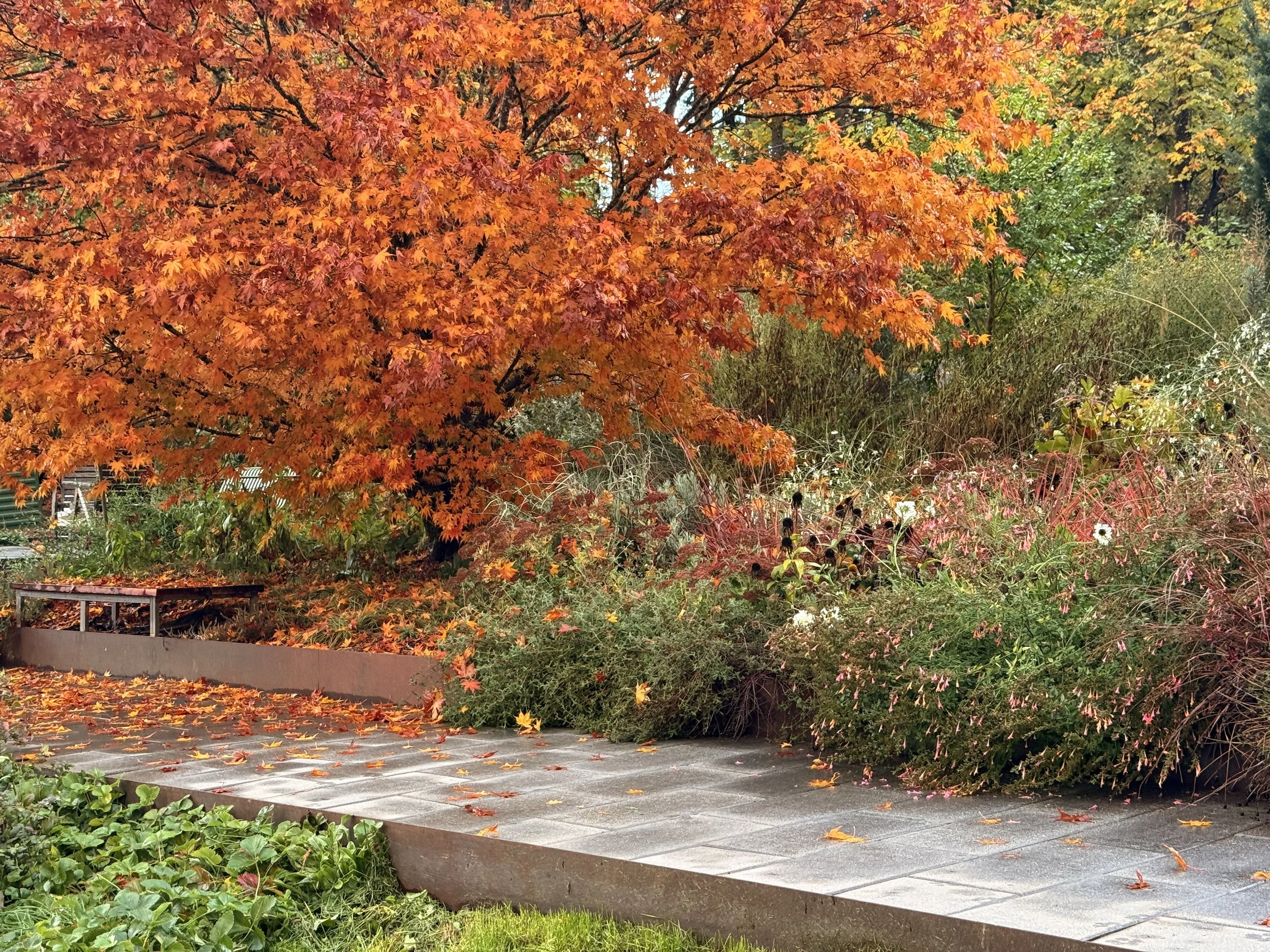
In your perennial beds, shrub borders, and around the base of trees, leave the leaves. A 2 to 3 inch layer of leaf litter is perfect. Why this works:
Provides insulation for plant roots through freeze-thaw cycles. A classic soil science study found that mulched soil experiences freezing and thawing 3.6 times less often at the 1-inch depth than bare soil, and stays 1 to 2 degrees Fahrenheit warmer in winter (Kohnke, Soil Science Society of America Journal). More recent extension research confirms mulch layers reduce the risk of freeze-thaw root injury by slowing heat loss from the soil (UMN Extension).
Creates overwintering habitat for beneficial insects and other invertebrates. The Xerces Society notes that the vast majority of garden invertebrates overwinter right where they lived all summer, just hidden under leaf cover a couple of inches thick (Xerces Society, Leave the Leaves). Bumble bee queens specifically burrow only an inch or two into the ground at the end of summer and rely on a thick leaf layer for winter protection.
Breaks down slowly, feeding soil microbes and adding organic matter. Leaf litter functions as a porous interface between mineral soil and open air, and as it decomposes it measurably increases the soil's capacity to absorb water and support biological activity (Forests, Kim et al.).
Suppresses weed germination in spring and retains moisture during dry spells.
A quick correction to a common oversimplification:
mason bees and leafcutter bees don't actually overwinter in loose leaf litter. They're cavity-nesting species that need hollow or pithy plant stems, and research shows they specifically need stems that were already cut or damaged in a previous season, not stems from the current year's growth. A 2026 participatory study across 20 gardens found zero occupancy in stems that had grown and remained uncut through their first winter (Ecological Entomology, Levenson et al.; NC State Extension).
What leaf litter actually shelters directly are bumble bee queens, ground beetles, spiders, and the overwintering eggs, pupae, and adults of many moths and butterflies (Xerces Society Nesting Resources). If you want to support stem-nesting bees specifically, the move is to leave last year's cut stems standing, not necessarily this year's fresh growth.
Under Shrubs and Trees: Definitely Leave Them
This is non-negotiable for me. Leaves under woody plants mimic what happens in nature. Forest floors aren't raked clean. Why this works:
Trees and shrubs evolved with leaf litter, and their root systems expect it.
Mycorrhizal fungi networks are directly supported by intact litter layers. Research on litter manipulation shows that removing leaf litter measurably alters arbuscular mycorrhizal fungal community composition, while root colonization is consistently higher in the organic litter layer than in bare mineral soil (New Phytologist, van Aarle et al.). Fine roots and their associated mycorrhizal fungi also accelerate the litter's own decomposition, creating a feedback loop that keeps building soil health (PubMed, Lang et al.).
Provides habitat for ground beetles, spiders, and other pest-eating predators.
Slowly releases nutrients back to the plants that created them.
Where to Move Leaves
and why
Lawns: Move Them
A thick mat of wet leaves on your lawn will smother the grass, create anaerobic conditions, encourage fungal disease, and leave you with dead patches come spring.
Options:
Mulch them in place with a mower. Run over leaves with a mulching mower when they're dry. The shredded leaves filter down into the turf, feeding the soil.
Rake them into beds. My preferred method. Rake leaves off the lawn and distribute them into garden beds or around shrubs.
Create a leaf pile habitat. Designate a corner of your yard for a leaf pile. This becomes premium overwintering habitat while creating leaf mold.
Paved Surfaces, Water Features, and Gutters: Remove Them
Leaves on hardscape are slippery and clog drains. Leaves in ponds and gutters create problems. Move them to beds or your leaf pile where they're useful.
The Aesthetic Question (And the Mulch Solution)
Let's be real: we've been trained to see bare soil as "clean" and leaf litter as "messy." But I'd argue that a garden bed with a natural layer of leaves looks intentional and cared for. There's texture. There's evidence that something real is happening in your soil.
However, if you just can't handle the aesthetic of leaves:
The Mulch-After-Leaves Strategy
Here's the compromise. Wait until all the leaves have dropped, usually late November into early December in Portland. Once leaf drop is complete:
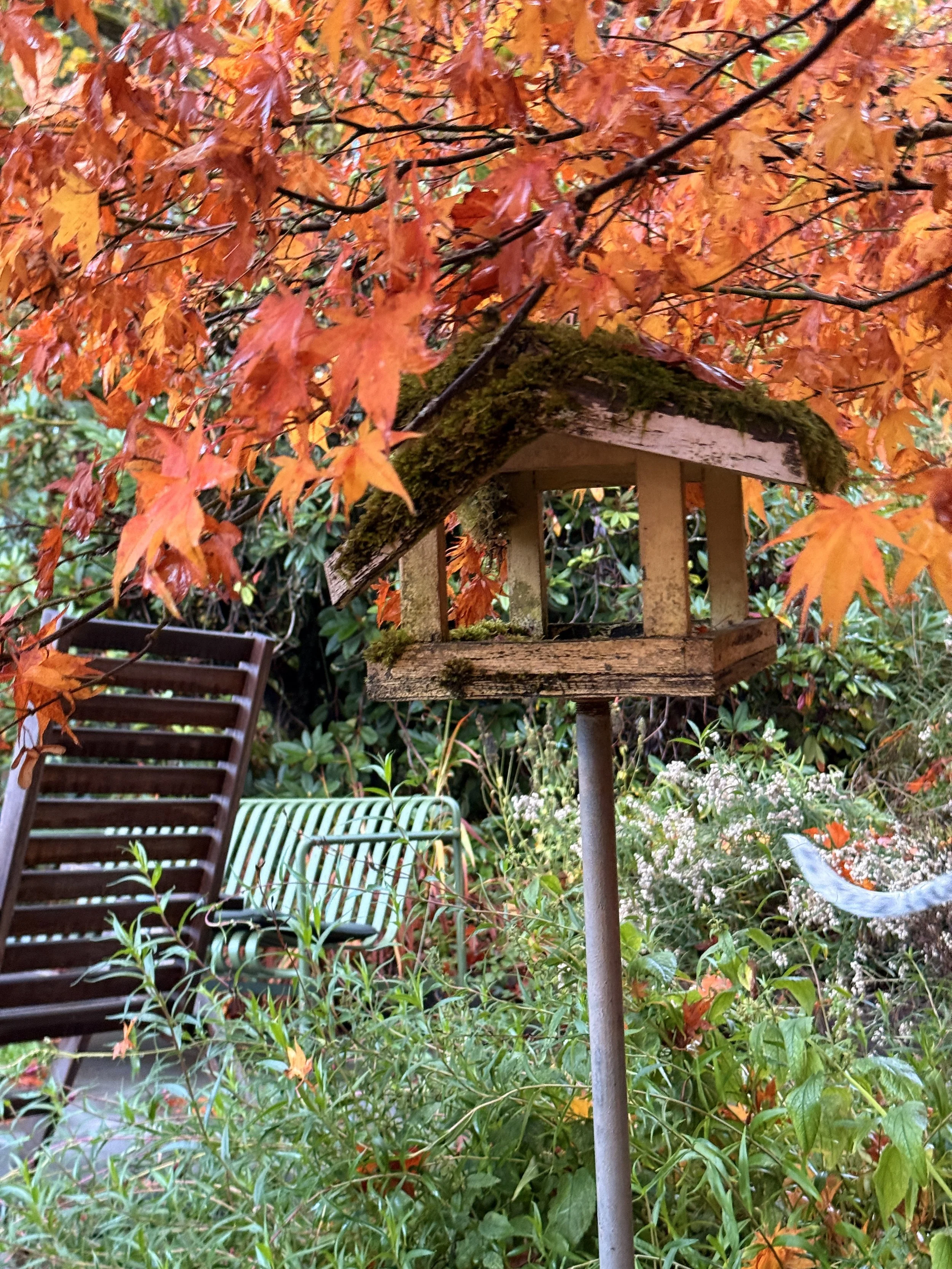
Let leaves sit for 2 to 3 weeks minimum. This gives overwintering insects time to settle into the leaf layer.
Don't remove the leaves. Leave them right where they are in your beds.
Top-dress with 1 to 2 inches of decorative mulch (arborist wood chips, shredded bark, or leaf mold). Spread the mulch over the leaf layer.
What this does:
Covers the "messy" leaves with a uniform, intentional-looking layer.
Keeps all the ecological benefits: the leaves are still there, still breaking down, still providing habitat.
The mulch layer holds the leaves in place.
Creates a finished look that satisfies conventional aesthetic standards.
Insects sheltering in the leaf layer remain undisturbed under the protective mulch blanket.
This is the compromise. You get the soil health, the habitat value, and the ecological function while also getting a garden that looks "done."
The Nuance: Plant-Specific Considerations
Not all plants tolerate heavy leaf cover equally.
Plants that can handle heavy leaf cover:
Native woodland perennials (Trillium, Wild Ginger, Sword Fern)
Established shrubs and trees
Spring bulbs (they'll push right through)
Ornamental grasses
Plants that need leaves pulled back:
Mat-forming perennials prone to crown rot (Phlox, some Sedums)
Evergreen perennials with basal rosettes (Heuchera, Epimedium)
Newly planted perennials (first year)
Alpine and rock garden plants
The rule: if a plant evolved in wet, dense forests, like our natives, it can handle leaves. If it evolved in drier, more open conditions, pull leaves back from the crown but leave them nearby.
Soil Health: What November Leaves Do for You
When leaves stay on the ground, they become food for an entire ecosystem of decomposers, and the research on this food web is genuinely fascinating:
Fungi break down lignin and cellulose, and their activity is directly tied to how quickly litter converts to usable soil nutrients.
Bacteria process simpler compounds, often colonizing material after detritivores have already broken it down mechanically.
Earthworms don't just pull leaves underground, they act as what researchers call "food-web engineers," driving the majority of litter and soil consumption in temperate forest systems and shifting carbon into stable, long-term soil storage (Nature Communications, energy and biomass distribution in soil food webs).
Millipedes, sowbugs, and springtails physically shred leaves into smaller particles, a process researchers call comminution, which dramatically increases the surface area available for microbial decomposition and measurably increases the organic matter's biological "lability," or how readily it releases nutrients (Communications Biology, detritivore conversion of litter).
Beetles and their larvae continue the breakdown process, and studies combining earthworms and millipedes together show faster decomposition and greater long-term carbon storage than either group working alone.
By spring, those leaves have transformed into humus, a stable form of organic matter that improves soil structure, increases water retention, provides slow-release nutrients, and feeds beneficial soil microbes.
This is free fertility. You're not buying compost. You're not buying fertilizer. You're letting the system do what it evolved to do.
November Soil Prep: Beyond Leaves
What I do:
Add compost to beds. I top-dress garden beds with 1 to 2 inches of finished compost in November. This gives soil biology something to work on over winter.
Plant garlic and cover crops. November is perfect for planting garlic. I also sow cover crops (crimson clover, hairy vetch) in fallow beds.
Mulch paths with wood chips. I refresh paths with arborist wood chips. This suppresses weeds and keeps mud contained during our wet season.
Don't till. Tilling destroys soil structure and disrupts the mycorrhizal networks that intact litter layers help sustain. I layer organic matter on top and let soil organisms incorporate it.
The Leaf Pile: Creating Premium Habitat
If you have space, create an intentional leaf pile. This is strategic habitat creation.
How to make a good leaf pile:
Location: near a fence line, behind a shed, or in a back corner.
Size: at least 3 feet by 3 feet by 3 feet. Larger is better.
Composition: mostly leaves, plus small twigs and plant stems. Avoid anything diseased.
Leave it alone: don't turn it, don't disturb it until late spring. This is overwintering habitat.
What uses your leaf pile: ground beetles, overwintering butterflies and moths, beetles and their larvae, and various beneficial invertebrates seeking insulated, undisturbed cover.
By late spring or early summer, the bottom layers transform into leaf mold, a genuinely excellent soil amendment. Research on leaf mold compost, including a Purdue University trial, found it improved soil structure, increased water-holding capacity, boosted tomato yields, and even increased survival of beneficial fungal inoculants that help plants resist disease (Purdue/Agronomy leaf mold study). Older but still-cited soil science trials found that even a 3-inch layer of leaf mold worked into sandy soil roughly doubled its water-holding capacity (Hill, Leaf-mold for soil improvement in home gardens).
What About Diseased Leaves?
Most leaf diseases don't survive winter in leaf litter, especially in our wet climate. But this deserves more nuance than a simple yes or no, because the research on sanitation effectiveness is genuinely mixed depending on the disease.
Exceptions where you should remove and dispose of leaves, with important caveats:
Apple scab (from apple trees with severe infections). Leaf litter is confirmed as the dominant overwintering site for this pathogen, and studies on aggressive sanitation (shredding, vacuuming, and even burning collected leaves) have shown inoculum reductions of 80 to 90 percent when combined with fungicide or biological treatments (Frontiers in Horticulture; NIAB disease cycle). That said, it's worth being honest that leaf litter removal is not a guaranteed fix. A four-year controlled trial in a maritime climate similar to ours found that removing or mowing leaf litter had no statistically significant effect on scab development or fruit loss, because the fungus can also overwinter in wood lesions and buds, and because achieving total leaf removal in a real garden setting is nearly impossible (Mac an tSaoir, Cooke, McCracken). The honest takeaway: remove badly infected leaves as one part of a management plan, not as a standalone cure.
Fire blight (from infected pear or apple trees).
Rose black spot (from heavily infected roses).
Tar spot (from maples, though this is mostly cosmetic).
For most gardens, leaving leaves doesn't increase disease pressure. The diverse microbial life in healthy leaf litter often outcompetes pathogens, and for the vast majority of what's dropping in a typical Portland yard, that diversity is doing you a favor, not creating a risk.
Your november to do list -
Your november to do list -
Leave leaves in:
Garden beds (2 to 3 inch layer)
Under trees and shrubs
Woodland and native plant areas
Designated leaf pile
Move leaves from:
Lawns (mulch in place or rake into beds)
Paved surfaces (sweep into beds)
Water features and gutters
Pull leaves back from:
Plant crowns prone to rot
Evergreen perennial rosettes
Newly planted perennials
Optional aesthetic finish:
Wait 2 to 3 weeks after leaves drop
Top-dress leaf layer with 1 to 2 inches decorative mulch
Creates finished look while maintaining ecological function
Other November tasks:
Top-dress beds with compost
Plant garlic
Sow cover crops in fallow beds
Mulch paths with wood chips
Do NOT till
FREE SOIL GUIDE.
FREE SOIL GUIDE.
Let Us Handle the Strategic Mess
Look, I know this is nuanced. I know it's a lot to think about when you're standing in the rain watching leaves blow around your yard. That's exactly why we created our Seasonal Fine Gardening program.
We come to your property seasonally, spring, summer, fall, winter, and handle all the ecological management your garden needs: strategic leaf placement, seasonal mulching, soil amendments, cover crop installation, native plant care, and all the other tasks that keep a regenerative garden thriving.
We understand which leaves to leave and where. We know which plants need what kind of attention. We manage for soil health and aesthetics because we know you need both.
This isn't mow-and-blow maintenance. This is ecological stewardship that makes your garden more beautiful and more functional with each season.
If you're tired of guessing whether you're doing it right, or if you simply don't have time to manage the nuance, we'd love to help.
Ready to hand this off to people who geek out about leaf placement and soil biology?
Contact us to learn more about our Seasonal Fine Gardening program.
We're currently booking for our winter/spring season.
The Question That Matters
Instead of asking "Should I rake my leaves?" ask this: "Where can these leaves do the most good?"
That question shifts you from following rules to thinking ecologically. And that's where real garden health begins.
November isn't about cleaning up. It's about setting the stage for what happens next. This is the work. Not raking is work. Strategic mess is work. Understanding nuance is work.
And if you'd rather have someone else do this work while you enjoy the results? That's what we're here for.
With gratitude for the rain, the leaves, and the patience to let things decompose,
Brit Sastrawidjaya
Founder, Blueprint Earth
FAQ
Do mason bees and leafcutter bees really overwinter in leaf litter?
Not directly. These are stem-nesting species that need hollow or pithy plant stems, and research shows they specifically need stems that were cut or damaged in a prior season, not fresh growth from the current year. What leaf litter directly shelters are bumble bee queens, ground beetles, spiders, and many overwintering moths and butterflies. If stem-nesting bees are your priority, leave last year's cut stems standing rather than assuming leaf litter alone covers it.
Will leaving leaves on my lawn kill the grass?
A thick, wet mat can smother turf, create anaerobic conditions, and encourage fungal disease. Mulch leaves in place with a mower when dry, or rake them into beds where they'll do far more good.
Does leaving diseased leaves guarantee more disease next year?
Not necessarily, and it's more nuanced than most advice suggests. For diseases like apple scab, leaf litter is a real overwintering reservoir, but controlled research shows leaf removal alone doesn't always meaningfully reduce disease, since the pathogen can also overwinter in wood and buds. Remove clearly diseased material as part of a broader plan, not as a guaranteed fix.
How thick should the leaf layer be in my garden beds?
2 to 3 inches is the sweet spot. Enough to insulate roots and suppress weeds without smothering crowns.
What if I don't like how leaves look in my beds?
Wait 2 to 3 weeks after leaf drop to let insects settle in, then top-dress with 1 to 2 inches of decorative mulch over the leaf layer. You get the finished look without losing any of the ecological function underneath.
Can I till leaves into my soil instead of leaving them on top?
We don't recommend it. Tilling destroys soil structure and disrupts the mycorrhizal fungal networks that intact litter layers help sustain. Let soil organisms incorporate the material naturally from the surface down.
Research sources cited:
Kohnke, H. Soil Science Society of America Journal (1963). Soil Temperature and Soil Freezing as Affected by an Organic Mulch. https://acsess.onlinelibrary.wiley.com/doi/10.2136/sssaj1963.03615995002700010010x
UMN Extension. Mulching for soil and garden health. https://extension.umn.edu/garden-and-home/yard-and-garden/gardening-minnesota/mulching-soil-and-garden-health
Xerces Society. Leave the Leaves: Winter Habitat Protection. https://xerces.org/leave-the-leaves
Xerces Society. Nesting Resources. https://xerces.org/pollinator-conservation/nesting-resources
Levenson, H.K. et al. Ecological Entomology (2026). To provide pollinator nesting habitat, cut dead perennial stems in their first winter. https://doi.org/10.1111/icad.70081
NC State Extension. Garden Cleanup for Pollinators: Trim Perennial Stems in Their First Winter. https://content.ces.ncsu.edu/garden-cleanup-for-pollinators-trim-perennial-stems-in-their-first-winter
Kim, T. et al. Forests (2023). Water Retention Capacity of Leaf Litter According to Field Lysimetry. https://doi.org/10.3390/f14030478
van Aarle, I.M. et al. New Phytologist. Arbuscular mycorrhizal fungal community composition is altered by long-term litter removal. https://nph.onlinelibrary.wiley.com/doi/10.1111/nph.14384
Lang, A.K. et al. PubMed (2020). Fine roots and mycorrhizal fungi accelerate leaf litter decomposition. https://pubmed.ncbi.nlm.nih.gov/33341954/
Nature Communications (2026). Energy and biomass distribution in soil food webs of temperate and tropical forests. https://www.nature.com/articles/s41467-025-68083-8
Communications Biology (2020). Detritivore conversion of litter into faeces accelerates organic matter turnover. https://preview-www.nature.com/articles/s42003-020-01392-4
Agronomy/Purdue University. Leaf mold compost shows benefit for tomato plants in degraded urban soils. https://www.agronomy.org/news/science-news/leaf-mold-compost-shows-benefit-tomato-plants-degraded-urban-soils/
Hill, D.E. (1978). Leaf-mold for soil improvement in home gardens. https://doi.org/10.5962/bhl.title.51086
Frontiers in Horticulture (2023). Primary inoculum of Venturia inaequalis in its asexual form in apple. https://www.frontiersin.org/journals/horticulture/articles/10.3389/fhort.2023.1175956/full
NIAB. Disease cycle and epidemiology (Apple scab). https://www.niab.com/disease-cycle-and-epidemiology-apple-scab
Mac an tSaoir, S., Cooke, L.R., McCracken, A.R. The effects of leaf litter treatments on overwintering of apple scab in a maritime environment. http://hdl.handle.net/11019/665