
The Clock Starts at Harvest
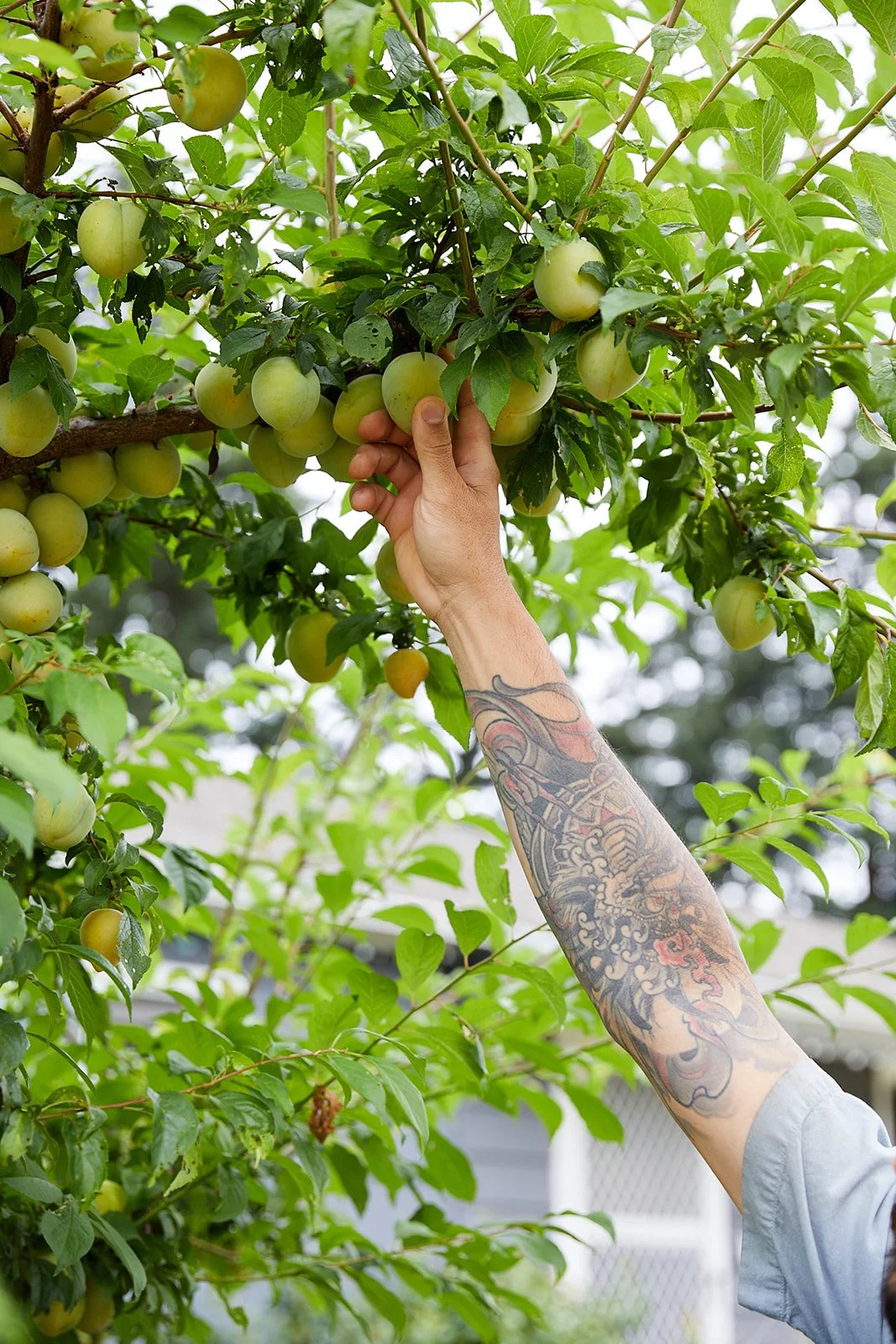
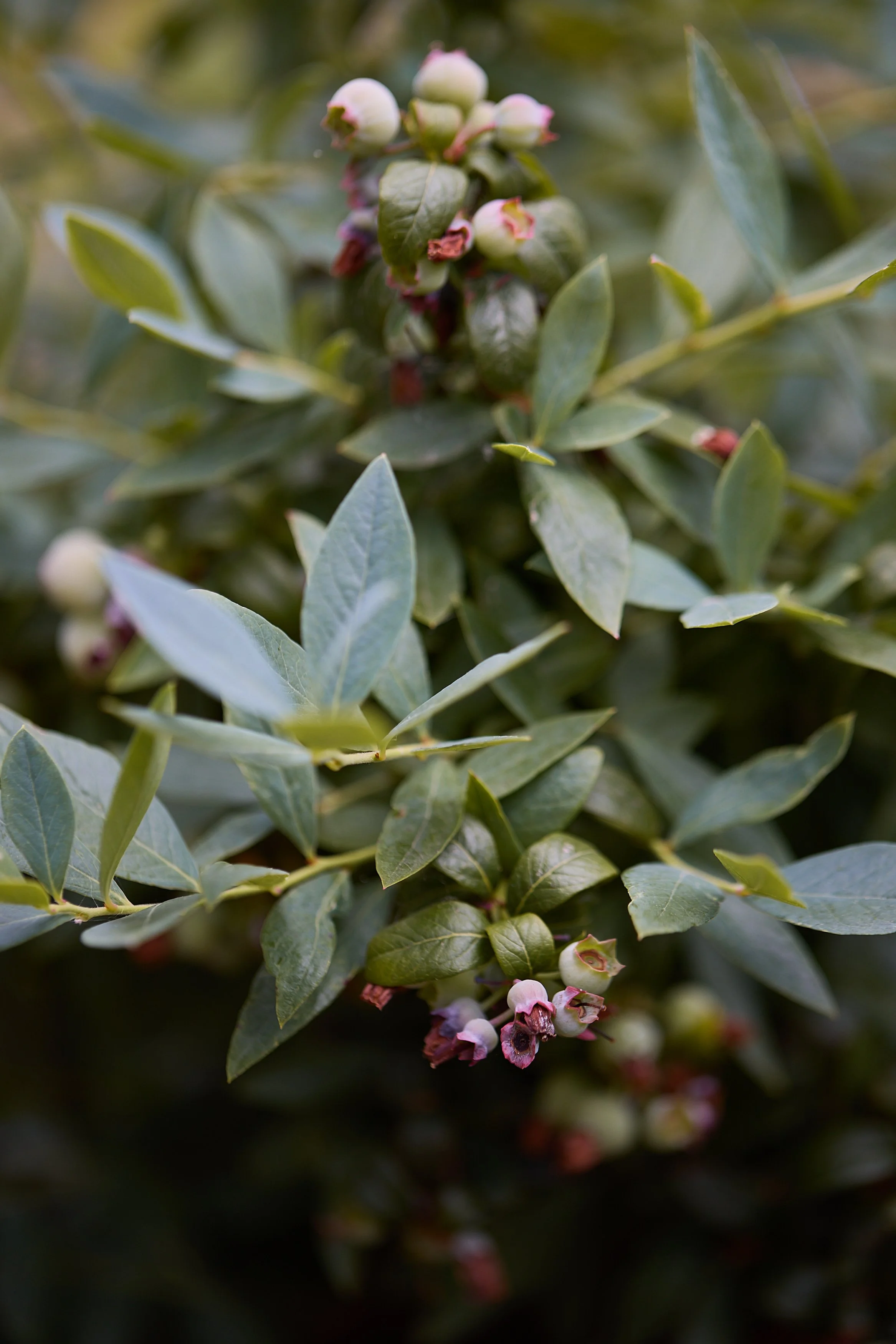
Reaching up to grab fresh fruit from the backyard.
I watched a documentary recently called Farmacy of Light.
It follows a farmer growing nutrient-dense food in the middle of a city and getting it to people within hours of picking it. One idea in it stuck with me and has not let go.
Freshness is not a feeling. It is a clock. And the clock starts the moment food is harvested.
We tend to think of a vegetable as finished when it is picked. It is not. A harvested plant is still alive. It keeps breathing, keeps using itself up, and keeps losing the very things we grow it for. The tomato on the counter and the spinach in the bag are both running down a battery that no longer gets recharged.
The closer you eat to the moment of harvest, the more of the food you actually get.
Full list of resources and citations at bottom of this page
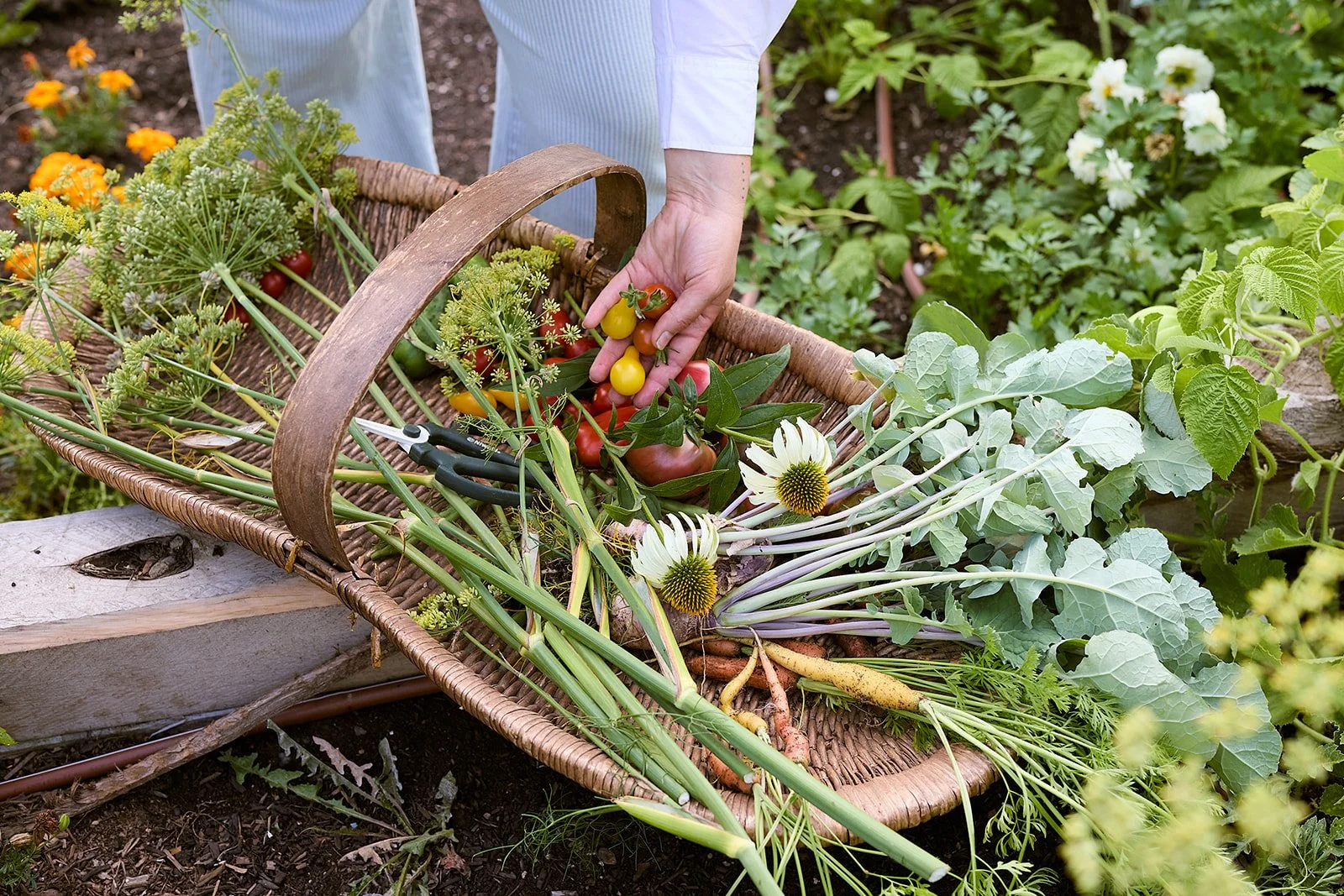
Harvested produce from the backyard garden.
Most produce travels a long way before you see it
Look at how far the average grocery-store vegetable has come. A widely cited study from the Leopold Center for Sustainable Agriculture tracked fresh produce arriving at a Chicago market and found it had traveled around 1,500 miles. A side-by-side comparison lined up that terminal-market produce against a local farmers market. Apples: 1,555 miles versus 77. Tomatoes: 1,369 versus 117. Lettuce: over 2,000 versus a few dozen.
That distance is days. Days of trucks, warehouses, and shelves. And to survive the trip, a lot of produce is picked before it is ripe, then ripened along the way. It starts lower in nutrition and then spends a week getting lower.
The Water Standard: What We Do
What the distance costs you
The losses are measurable, and they are not small. Researchers at UC Davis found that vegetables can lose anywhere from 15 to 77 percent of their vitamin C within a week of harvest, depending on the crop and how warm it is kept. A Penn State study on spinach found it held only about half of its folate and carotenoids after eight days in the refrigerator, and it lost them faster the warmer it got. As a general rule, many vegetables shed close to a third of some nutrients within three days of being picked.
Warmth speeds the clock. A bunch of greens left in a hot car for an hour can lose more than greens kept cold for days. So the produce that looks fine on the shelf has often already spent most of its nutrition getting there.
There is a second layer to this. Our produce starts lower than it used to. A University of Texas analysis of USDA records found common vegetables carry less iron, calcium, and vitamin C than they did in the 1950s. So we are starting with less, then losing more on the way to the plate. That is the whole problem in one sentence.
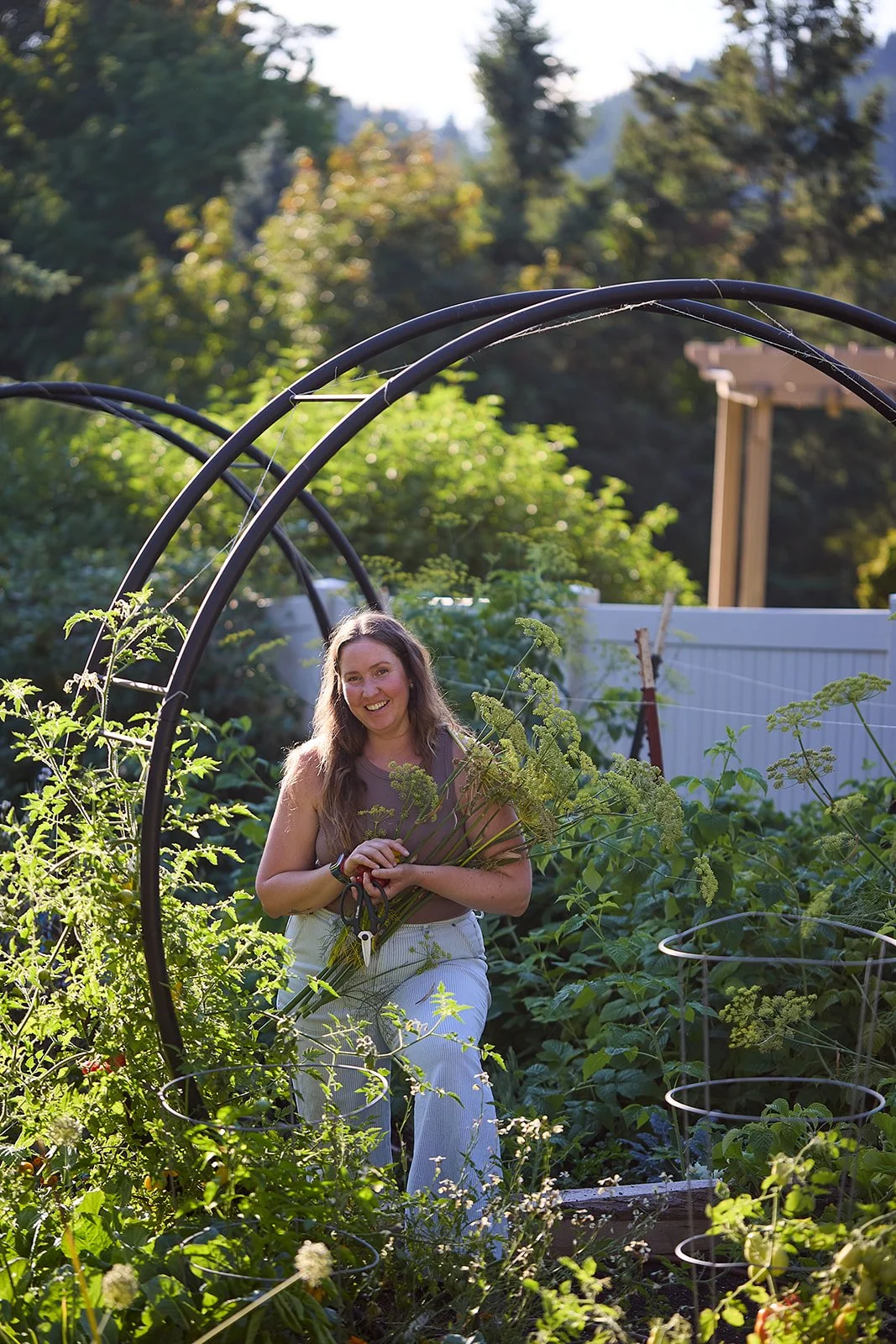
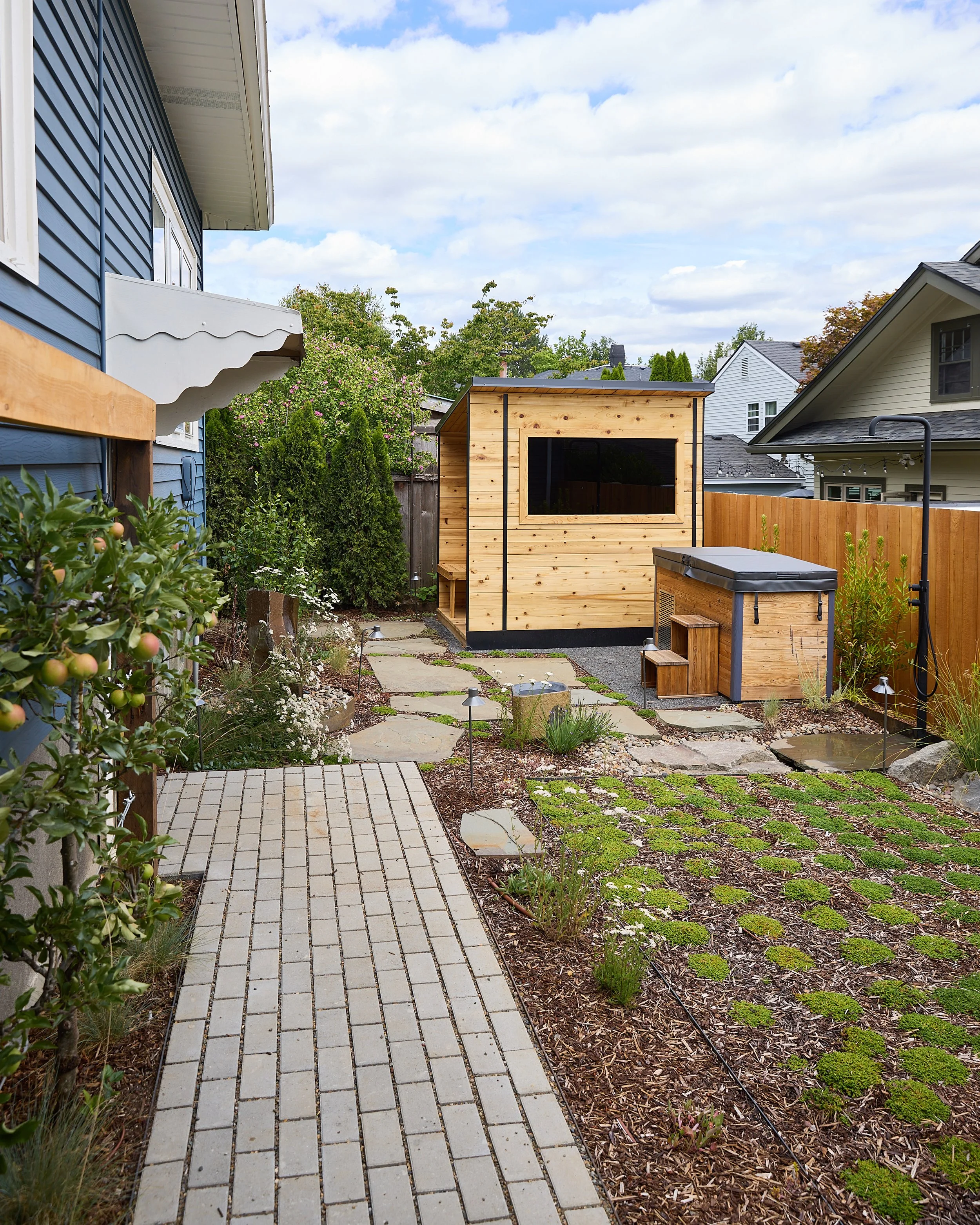
Backyard BE Gardens
The fix is proximity and speed
You cannot change the science of a picked plant. You can change how long it sits. That is the entire case for growing your own food and for buying local.
When you pick a tomato off your own vine and eat it that afternoon, the clock barely started. When you buy from a farmer who harvested that morning, you are getting food a week younger than the grocery version, with most of its nutrition intact. This is not about being fancy. It is about getting what you paid for.
The distance is also a safety problem, not just a nutrition one
There's a second cost to a long supply chain that has nothing to do with vitamins, and 2026 has made it hard to ignore. The FDA has already logged 21 foodborne illness outbreak investigations this year, with 18 still active, against an average of about 25 for an entire year across 2021 to 2025. Cyclosporiasis alone has produced close to 14,000 lab-confirmed cases so far in 2026, compared to roughly 1,180 during the same months of 2025, most of it traced to lettuce moving through a multistate supply chain. Altogether, outbreak-associated illness this year is running at close to seven times the recent yearly average.
https://www.theverge.com/science/983241/food-recalls-bigger-out-of-control
Here's the part that should actually change how you think about your grocery cart: about 40 percent of FDA foodborne illness investigations over the past five years never identify a source. Not slowly identified. Never identified. The product passes through too many hands, states, and processing points for the trail to hold.
This isn't a story about one bad farm or one careless company. It's what happens when a system is built for volume and shelf life instead of transparency. The FDA's own Food Traceability Rule, meant to close this exact gap for high-risk foods like leafy greens, peppers, and eggs, was supposed to take effect in January 2026. Enforcement has since been pushed to 2028.
Buying local closes that gap without waiting on regulation to catch up. When you buy from a farmer at a market, a stand, or through a CSA, there is no multistate chain to trace. You know the farm. You often know the field. You can ask when it was picked and get a real answer. That's not a nice-to-have anymore. Right now, it's a form of food safety the conventional system isn't built to offer.
about 40 percent of FDA foodborne illness investigations over the past five years never identify a source. Not slowly identified. Never identified. The product passes through too many hands, states, and processing points for the trail to hold.
Growing your own is only half of it
Not everyone can grow all their food, and no one should feel like they have to. The other half of the answer is to buy from a local farmer, and to actually go to them. The grocery store is a middleman. When you get to the farmer, through a market, a farm stand, or a CSA box, you do something a grocery run cannot. You keep a working farm working. That matters for four reasons, and none of them are small.
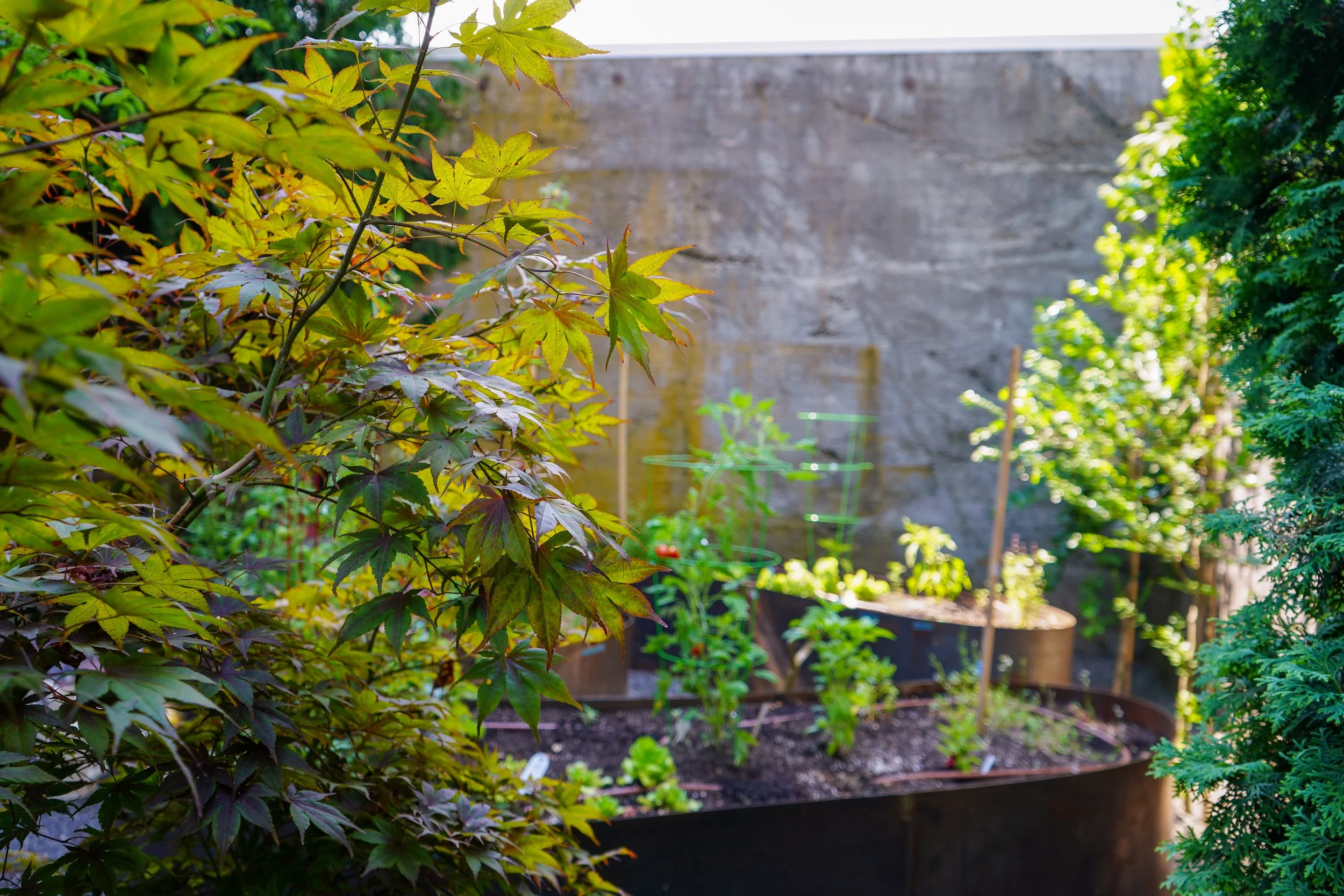
A contemporary garden design in Sellwood
You keep money in your own community. When you buy from a national supply chain, the farmer sees very little of your dollar. Across the US food system, farmers receive only about 14 cents of every dollar spent on food. The rest goes to shipping, packing, and marketing far from where you live. Buy direct and that flips. Research on local food finds that every dollar spent locally generates another 32 to 90 cents of activity in the same community, because a local farmer turns around and spends it at local businesses. Farms that sell locally also support far more jobs per dollar than farms selling only into national channels.
You help build soil, not just borrow it. Small local farms are far more likely to be the ones doing the patient work: cover cropping, composting, keeping ground covered, and treating soil as something to improve rather than mine. When you buy from them, you are funding that work directly. A wholesale commodity buyer rewards yield above all. A neighbor who tastes the difference rewards care.
You protect land from the bulldozer.
Farmland does not usually disappear in a drought. It disappears under pavement. The United States lost or compromised about 2,000 acres of farmland and ranchland every day between 2001 and 2016, most of it to development. A farm only stays a farm if farming pays. Every dollar that reaches a local grower helps keep that ground in food instead of in a parking lot. Once it is paved, it does not come back.
You keep the knowledge and the nutrition alive for the next generation. The farmers who know how to grow nutrient-dense food in living soil are aging out, and much of that skill is not written down. It lives in people. When we support local growers, we keep those people farming and keep that knowledge moving to whoever comes next. We are not just buying dinner. We are keeping a system healthy enough to feed the kids who are not born yet.
How to shorten your own clock
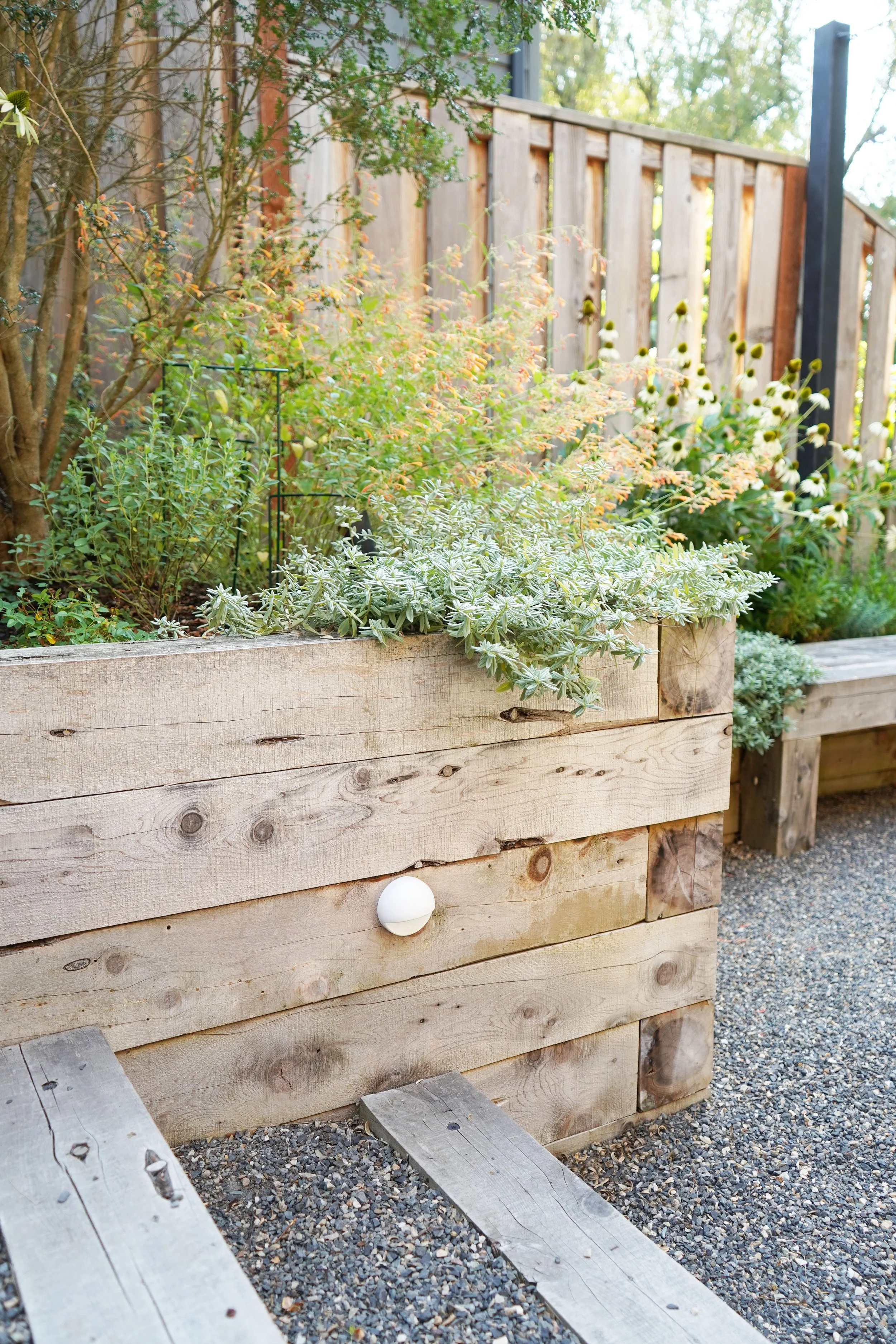
Juniper garden beds contain a mix of edible plants, herbs, and landscape plants.
You do not need acreage. You need a little planning and a few habits.
Grow a few of the fast-fading things yourself. Leafy greens, herbs, and tomatoes lose the most, the fastest, so they are the ones most worth having a few steps from your kitchen. Even a few pots or one good bed changes what lands on your plate.
Buy from local farmers, and ask one question. When was this picked? A good farmer knows, and a good answer is measured in days, not weeks. Farmers markets, farm stands, and CSA boxes all shorten the distance between harvest and you.
Eat the perishable things first. When you get produce home, eat the greens and soft items early in the week and save the sturdier roots and squash for later. You are racing a clock, so spend the fastest-fading food first.
Store it cold and eat it soon. Cold slows the clock. A week is not a goal to aim for. It is a limit to beat.
Why this is our work
At Blueprint Earth, we design landscapes that give something back to the people in them, and food is one of the clearest ways to do that.
It is about the shortest supply chain there is. Harvest to plate in minutes, with nothing lost to a truck.
That is the same principle behind everything we build. Plant the water first, feed the soil, and grow food where people live. The land gives more when we work with it instead of shipping around it.
If the idea of eating closer to the source is pulling at you, watch the film that started this for me. Farmacy of Light is worth your time.
And if you want to build a landscape that feeds you, we would love to talk it through. Email hello@be.land to set up a garden chat, or visit be.land to connect.
The clock starts at harvest. The best thing you can do is eat before it runs down.
Ready to talk about your site? Schedule a Garden Chat
Checkout the Land Language Podcast to learn from those changing the industry. Listen here
Join us for our upcoming speaking engagements Here
Reference Links
Food miles: Leopold Center for Sustainable Agriculture, "Food, Fuel, and Freeways," 2001. https://dr.lib.iastate.edu/entities/publication/51ef6421-3062-487f-af1a-29125328f7a5 (with local comparison via Foodwise / Ferry Plaza Farmers Market)
Post-harvest vitamin C loss: University of California, Davis, "Maximizing the Nutritional Value of Fruits and Vegetables," Diane M. Barrett, 2007. https://postharvest.ucdavis.edu/publication/maximizing-nutritional-value-fruits-vegetables
Spinach folate and carotenoid retention: Pandrangi and LaBorde, Penn State University, "Retention of Folate, Carotenoids, and Other Quality Characteristics in Commercially Packaged Fresh Spinach," Journal of Food Science, 2004. https://pure.psu.edu/en/publications/retention-of-folate-carotenoids-and-other-quality-characteristics/ (press release: https://www.psu.edu/news/research/story/storage-time-and-temperature-effects-nutrients-spinach)
Nutrient decline since the 1950s: Davis et al., "Changes in USDA Food Composition Data for 43 Garden Crops, 1950 to 1999," Journal of the American College of Nutrition, 2004. https://doi.org/10.1080/07315724.2004.10719409
Farmer share of the food dollar: USDA Economic Research Service, Food Dollar Series. https://www.ers.usda.gov/data-products/food-dollar
Local jobs and direct marketing: Farmers Market Coalition. https://farmersmarketcoalition.org/education/stimulate-local-economies/
Local multiplier effect: NC State Extension, "Local Food Systems: Clarifying Current Research" (review of Jablonski, Martinez, and Meter). https://content.ces.ncsu.edu/local-food-systems-clarifying-current-research
Farmland loss to development: American Farmland Trust, "Farms Under Threat: The State of the States." https://farmlandinfo.org/publications/farms-under-threat-the-state-of-the-states/
FDA foodborne illness outbreak investigations, 2020-2026: FDA CORE (Coordinated Outbreak Response and Evaluation) Network data, as reported by CNN, Newsweek, and The Verge, August 2026.
Cyclosporiasis case data, 2025-2026: CDC surveillance data, as reported by Newsweek and CNN, August 2026.
FDA Food Traceability Rule enforcement delay: The Verge, "Why does it seem like food recalls are out of control this year?" August 2026. https://www.theverge.com/science/983241/food-recalls-bigger-out-of-control
Film: Farmacy of Light, Food Revolution Network. https://farmacy.foodrevolution.org/
FAQ
-
Yes. A harvested vegetable is still alive and using up its own stored nutrients. UC Davis research found vegetables can lose 15 to 77 percent of their vitamin C within a week of harvest, depending on the crop and storage temperature. Spinach loses about half its folate and carotenoids within eight days in the refrigerator. The warmer the storage, the faster the loss.
Most landscape firms start with aesthetics and work backward to drainage. We start with the water and let that intelligence shape everything that follows: grading, plant selection, hardscape placement, irrigation design. The result is a landscape that works with the site's natural hydrology rather than fighting it.
This is what we mean when we say we plant the water first. It's not a philosophy. It's a sequence.
-
On average, around 1,500 miles, according to a widely cited Leopold Center for Sustainable Agriculture study. Some items travel much farther: lettuce can travel over 2,000 miles compared to just a few dozen miles from a local farmers market. That travel time is also why produce is often picked before it's ripe and ripened in transit, rather than in the field.
When water is designed first, plants go into conditions they can actually thrive in. Irrigation is sized for what the site and plant palette actually need, not default coverage. Grading directs water away from structures and toward infiltration zones. The result is a landscape that establishes faster, requires less intervention, and gets better over time rather than degrading.
Designing plants before water is designing for the day of completion. Designing water first is designing for year 3, year 10, and year 30.
-
It can be, mainly because of time, not because "local" itself adds nutrients. Locally grown produce is typically sold within days of harvest instead of a week or more, so less time has passed for nutrient breakdown. A tomato picked that morning and sold at a farm stand that afternoon has lost far less nutrition than one picked early, shipped 1,500 miles, and sold a week later.
At Blueprint Earth, we assess infiltration based on actual soil composition, not assumptions from a visual walk-through. Soil texture, compaction depth, organic matter content, and existing drainage patterns all factor in. A sandy loam infiltrates at a very different rate than a compacted clay subsoil, and designing as if they're the same produces systems that fail.
For complex sites or projects with significant impervious surface, we work with grading analysis and site-specific stormwater assessments to ensure bioretention zones are sized to handle the actual load. Oregon has specific standards for stormwater management, and our designs meet or exceed them.
-
Outbreak investigations and case counts are both up compared to recent years. The FDA has logged 21 foodborne illness outbreak investigations in 2026, with 18 still active, compared to an average of about 25 per year across 2021 to 2025, and the year isn't over. Cyclosporiasis cases alone are near 14,000 so far in 2026, compared to roughly 1,180 during the same period in 2025.
-
Long, multistate supply chains make tracing difficult. About 40 percent of FDA foodborne illness investigations over the past five years never identify a source, because the product passes through too many hands, processors, and states for the trail to hold. Buying direct from a local farmer removes most of that chain entirely.
-
Yes, measurably. Farmers typically receive only about 14 cents of every dollar spent on food through conventional supply chains. When you buy direct, that flips, and research shows every dollar spent locally generates another 32 to 90 cents of additional economic activity in the same community.
-
No. Growing even a few fast-fading items yourself (leafy greens, herbs, tomatoes) shortens your personal "clock" the most, since those lose nutrients fastest. For everything else, buying from a farmers market, farm stand, or CSA closes most of the same gap without requiring any land at all.
-
An edible landscape is a designed outdoor space that produces food alongside its aesthetic and functional design, shortening the harvest-to-plate timeline to minutes instead of days. It's part of how Blueprint Earth applies regenerative design principles (planting the water first, building soil, growing food where people live) to residential landscapes.
-
Keep it cold and eat it soon. Cold slows nutrient loss, but it doesn't stop it — a week in the fridge should be treated as a limit to beat, not a target to hit. Eat soft, perishable items (greens, herbs, tomatoes) first, and save roots and squash for later in the week. description
-
Ask when it was picked. A good farmer will know, and a good answer is measured in days, not weeks. That question is the fastest way to gauge how close you're getting to the source, whether you're at a farmers market, a farm stand, or picking up a CSA box.