
How to make sure your outdoor living space lasts
APRIL | 04.29.26
You Already Know What You Want Out There.
Here’s How to Make Sure It Lasts.
The one thing that determines whether your landscape vision becomes a living, lasting reality, and what to understand before you invest in your outdoor space.
You have been carrying a vision of this in your mind for a while now.
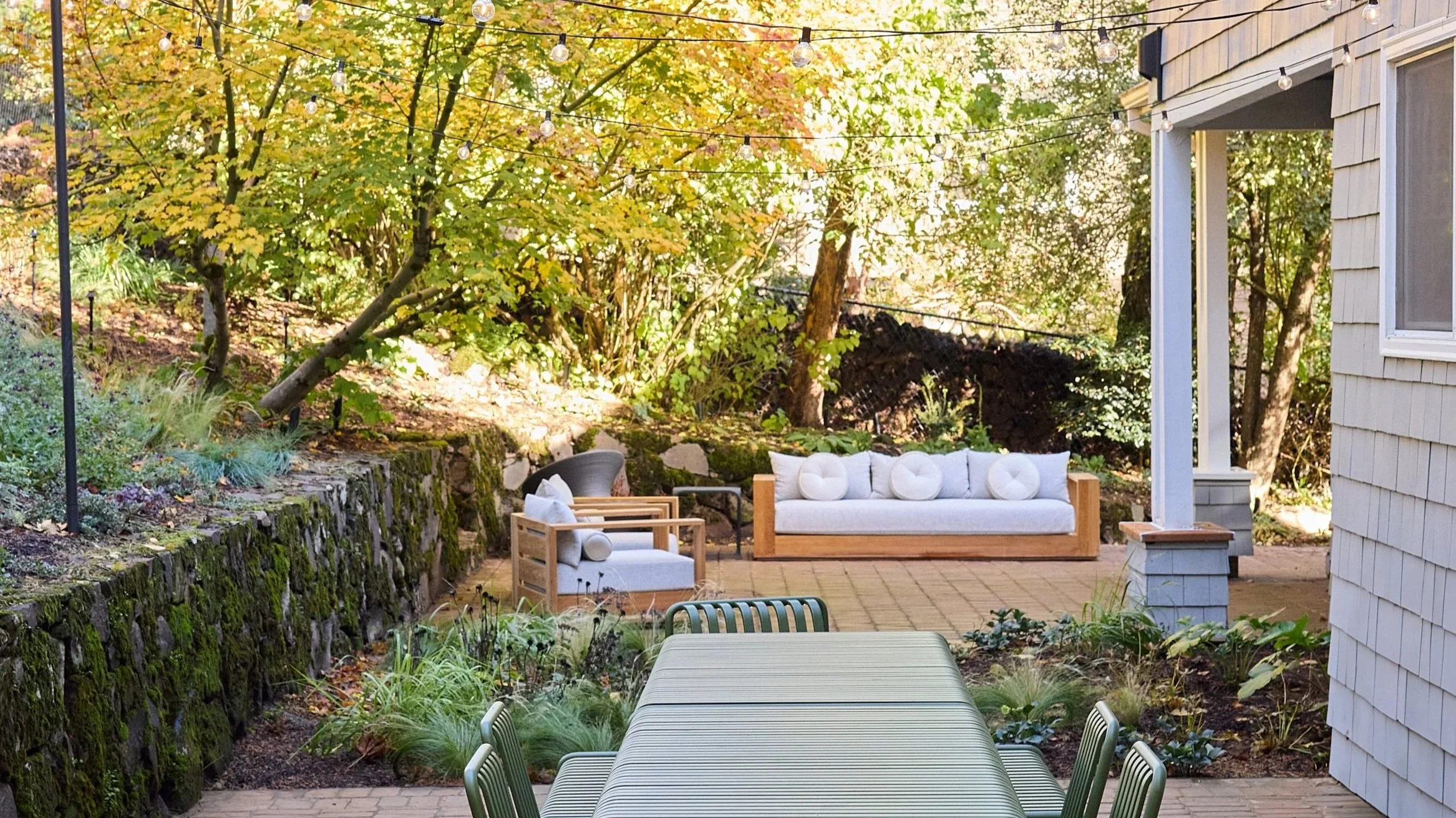
Maybe it’s the morning when you can finally have coffee outside, in a garden that feels alive around you, the kind of quiet that restores you before the day starts. Maybe it’s the backyard that becomes the place everyone gravitates to, where your kids want to be, where guests arrive and immediately drop their shoulders. Maybe it’s simply the feeling that your home, all of it, finally matches the life you are living.
That version of your outdoor space is real. It is a design opportunity. And you are closer to it than you might think.
Before you get there, there is one thing most homeowners never consider, and most landscape companies never bring up. It will determine whether your investment in that vision thrives for decades or quietly struggles from the start.
It’s what happens when it rains.
Where You Are Right Now
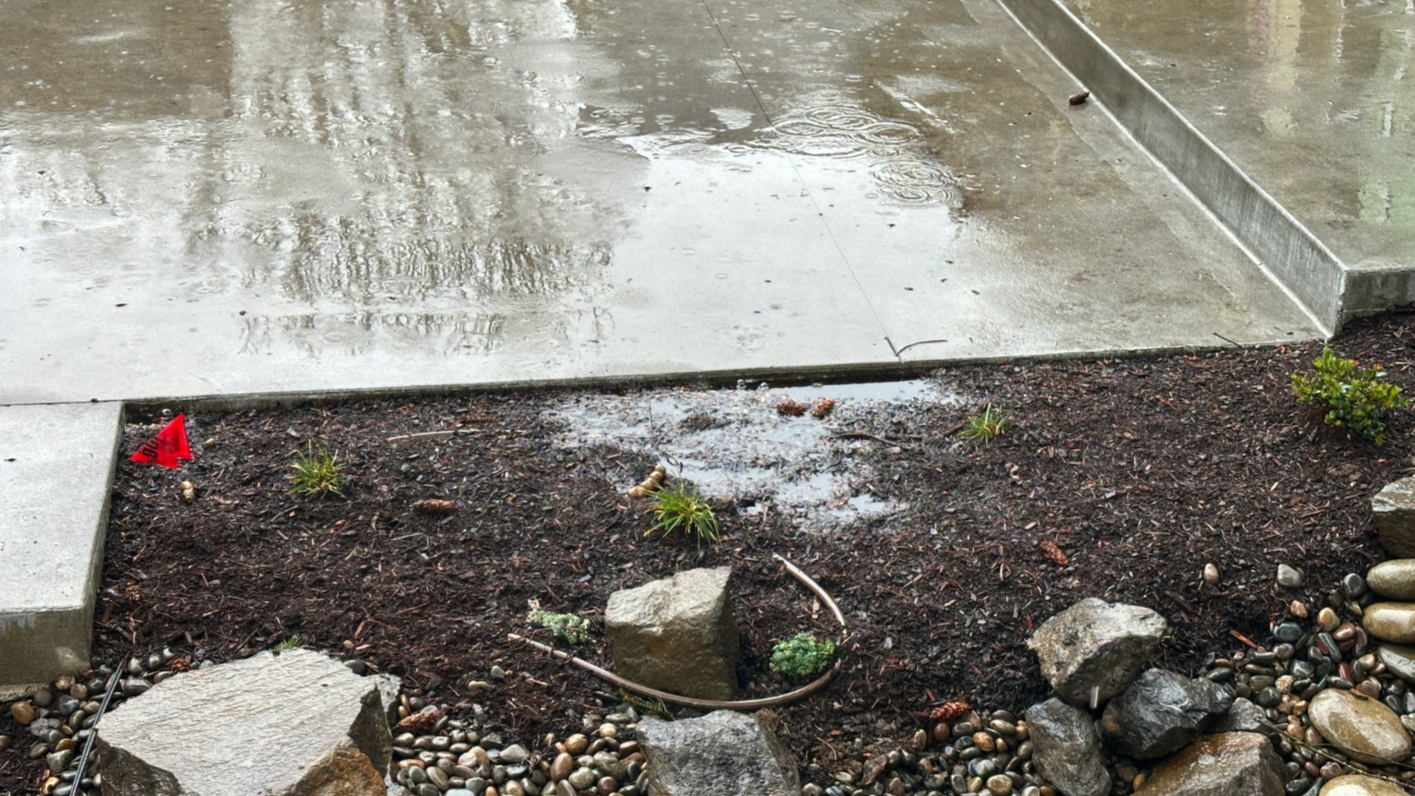
You may already be noticing things. A low spot that stays soggy longer than it should. Plants that never quite thrive. A corner of the yard that pools after every rain. A nagging feeling that something underneath is not quite right, even if you cannot name it.
Or maybe you haven’t noticed anything yet, because the problem is invisible. Water moves in the wrong direction silently, for years, before the signs become obvious. By the time a homeowner sees the symptoms, the damage is already underway: in the soil, at the foundation, in the plants that never establish properly because they were never in the right conditions to begin with.
Either way, you’re likely standing on a property with untapped potential and an invisible system––your land's hydrology––that has never been properly worked with.
That’s exactly where transformation begins.
What Your Land Is Doing Right Now (Whether You Know It or Not)
Every time it rains, your property is making decisions. Water is moving somewhere. The question is whether it is moving the way it should, or quietly working against you.
Grading is the shaping of your land: how the surface is sloped and contoured to direct water.
On a well-graded property, water moves away from your home naturally. It flows at the right rate, not fast enough to erode the soil, not slow enough to pool and saturate. It soaks gradually into the ground, supporting plant life and replenishing the water table. Your foundation stays dry. Your plants establish deeply. Everything above the surface gets to become what it was designed to be.
On a property with grading problems, the opposite is true. Water moves toward the house instead of away from it. It sits in low spots. It compacts the soil it crosses. Over time it puts quiet pressure on the very foundation your home is built on.
No matter how beautiful a landscape looks in its first season, it will always struggle if the ground beneath it was never set up to support it.
What This Costs You If It Goes Unaddressed
Grading carries real financial weight. Properties with drainage and grading problems sell for 8% to 10% less. On an $800,000 home, that is between $64,000 and $80,000 that buyers discount before making a single offer.
A correctly graded property eliminates that penalty entirely. A well-executed landscape project adds a 6% to 7% value premium on top. And because plants mature and root systems deepen over time, a landscape built on the right foundation is one of the only home improvements that genuinely appreciates.
A kitchen remodel peaks the day it is finished. A properly graded landscape gets better every year.
Your Property Has a Water Story. It Can Be a Good One.
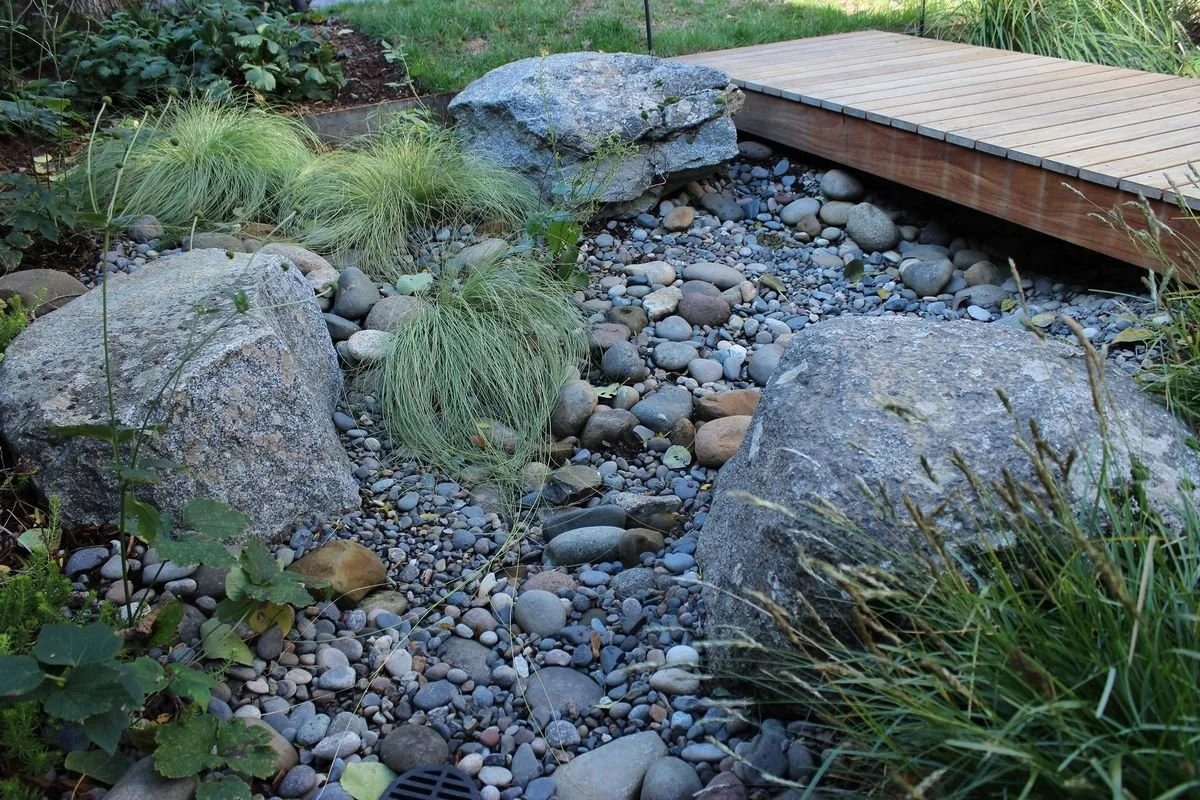
Stormwater management shapes how water behaves across your entire property, from the moment it falls until it soaks in or leaves the site. Grading is the foundation of that system, but stormwater management includes everything water touches along the way.
When your property's water story is designed with intention, you stop fighting nature and start working with it. Rain becomes replenishment instead of damage. Your soil stays healthy. Your plants establish deeply because their root zones are neither drowning nor parched. The landscape you have been imagining has room to actually become itself.
Depending on your site, a stormwater strategy might include:
Rain gardens, planted depressions that capture and filter runoff from roofs and hard surfaces, turning drainage into something beautiful and functional
Bioretention swales, gentle channels with deep-rooted natives that slow water down and let it infiltrate gradually, exactly where plants need it most
Permeable paving, surfaces that let water pass through rather than sheet off into overtaxed municipal drains
Native plantings, deep-rooted species that dramatically increase your soil's capacity to absorb and hold water over time, while providing habitat and blooms for pollinators through the shoulder seasons
A Note on French Drains, and Why We Rarely Use Them
You will notice we did not lead with French drains. That is intentional.
French drains, subsurface perforated pipes that redirect water underground, are a common go-to in conventional landscaping. They are also a last resort in ours. They clog over time. They require ongoing maintenance. And more importantly, they export water off your property entirely, which means you lose it.
In the Pacific Northwest, we have real summer drought. Every drop that falls during the wet season is a resource, one that, if handled well, can be moved through your landscape and deposited exactly where your plants need it most. Not into a drywell. Not down the sidewalk into the storm drain. Into the root zone of the garden you are trying to grow.
When we design with surface runoff solutions first, swales, rain gardens, berms, and thoughtful grading, we are not just managing drainage. We are building an irrigation strategy. We are setting your property up to use the rain it receives rather than shed it as fast as possible.
The result is measurable. Irrigation bills come down. Plant establishment rates go up. A landscape planted with the right natives, ones selected to thrive in your specific conditions and support pollinators from early spring through late fall, becomes genuinely self-sustaining in ways a conventionally irrigated garden never will.
A French drain solves a problem. A well-designed stormwater system creates an asset.
We do reach for subsurface solutions when surface options genuinely cannot do the job: foundations under extreme pressure, hardscape constraints, sites where there is simply nowhere for water to go above ground. But it is never our first move.
In a regenerative landscape, stormwater management does more than protect your home. It transforms your property into something that actively gives back, reducing your water bill, increasing plant health, supporting bees and native pollinators through seasons when most gardens have nothing to offer. Your property stops taking from the land. It starts healing it.
What Your Property Can Become
Here is what the homeowners we work with describe on the other side of this process.
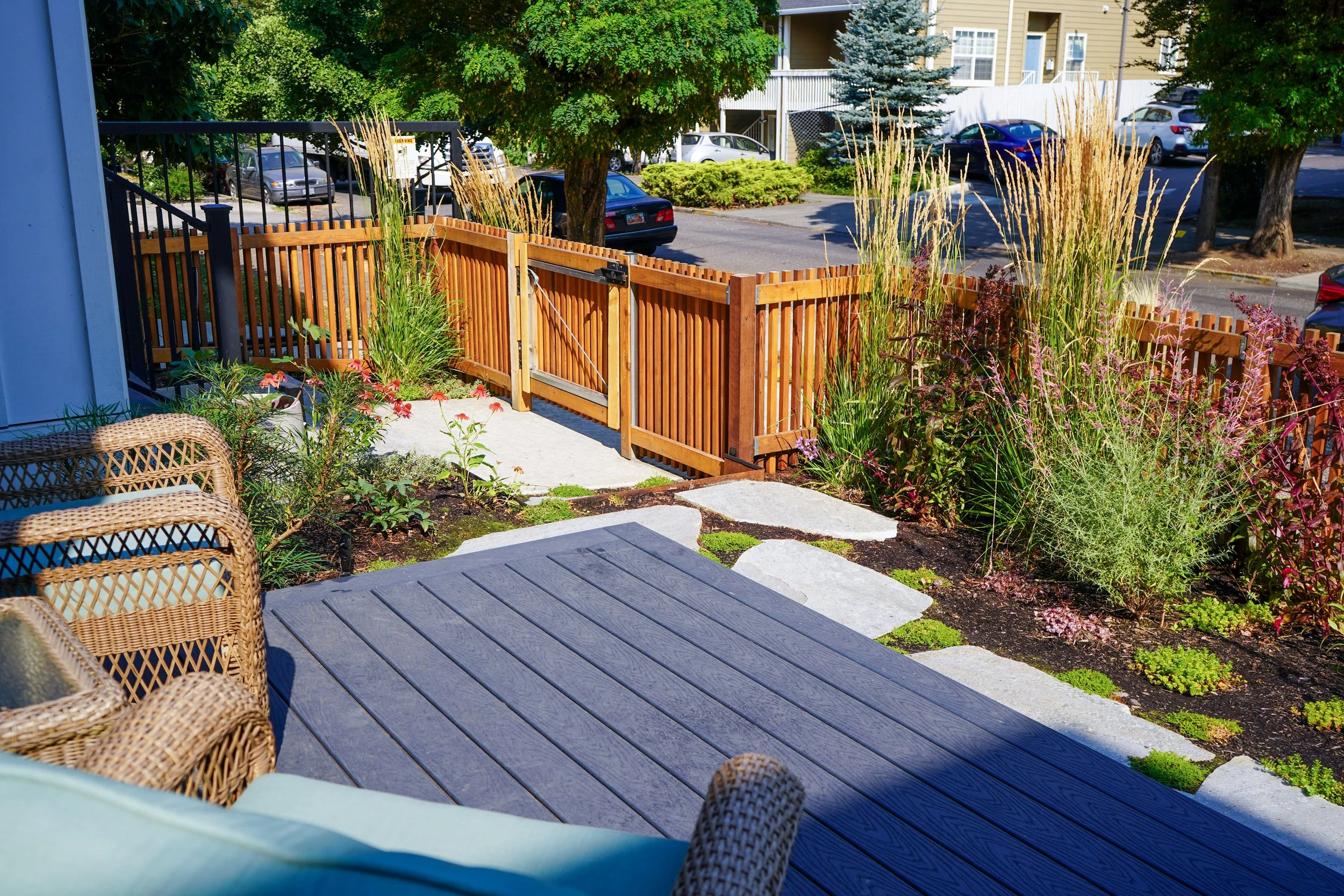
After a heavy rain, you walk outside and nothing is pooling. The patio is clean. The garden beds look exactly as they did before the storm. The plants that used to struggle are putting out new growth because, for the first time, their roots are in conditions that actually support them.
The yard your kids used to avoid, because it was always soggy or muddy in the wrong places, is now the yard they want to be in. The gathering space you imagined actually gathers people, because it is dry, it is beautiful, and it holds the energy of a place designed to be lived in.
The low-grade anxiety about water near the foundation is gone. Not patched over. Actually resolved, from the ground up.
Over time, the landscape starts to self-regulate. Deep roots increase the soil's absorption capacity. Beneficial microbial life takes hold in the bioretention areas. The plants fill in and the whole system becomes more resilient each season, requiring less irrigation, less intervention, less maintenance, because it was set up correctly from the start.
This is not a fantasy. This is what happens when grading and stormwater management are treated as the foundation of design rather than an afterthought.
Signs Your Property Is Ready for This Conversation
You do not have to have visible drainage problems to benefit from getting grading right. But here are the signs that your property is telling you something:
Water pooling in the same spots after every rain, even hours later
Soggy or saturated lawn areas that never fully dry
Moisture marks on basement or crawl space walls
Small erosion channels where soil is being carried away by moving water
Plants that struggle in spots where they should thrive
Patios, paths, or driveways that have shifted or settled unevenly
A yard that slopes toward the house rather than away
Downspouts that discharge near the foundation with no clear path away
If any of these sound familiar, grading and drainage is the first conversation to have, before plants, before patios, before any design element at all. Get the foundation right, and everything else follows.
The One Thing That Protects Your Investment
Grading mistakes almost never happen in the design. They happen in the gap between design and construction.
When one company draws the plan and a different company builds it, small grading decisions get made in the field, in the moment, by a crew that was not part of the original vision. A slightly different slope. A swale that gets compressed because it was inconvenient during construction. A grade break that gets interpreted loosely.
Those small decisions compound. Water ends up moving in the wrong direction, silently, for years. Your landscape struggles. Your foundation is under quiet pressure. The vision you paid for does not perform the way it should.
The solution is straightforward: work with a team that designs and builds under the same roof. When the people who determine your grading plan are the same people responsible for executing it on the ground, there is no gap. There is no moment where your home's foundation is left to someone else's interpretation.
What you envisioned is what gets built. The way it was designed to perform is the way it actually performs.
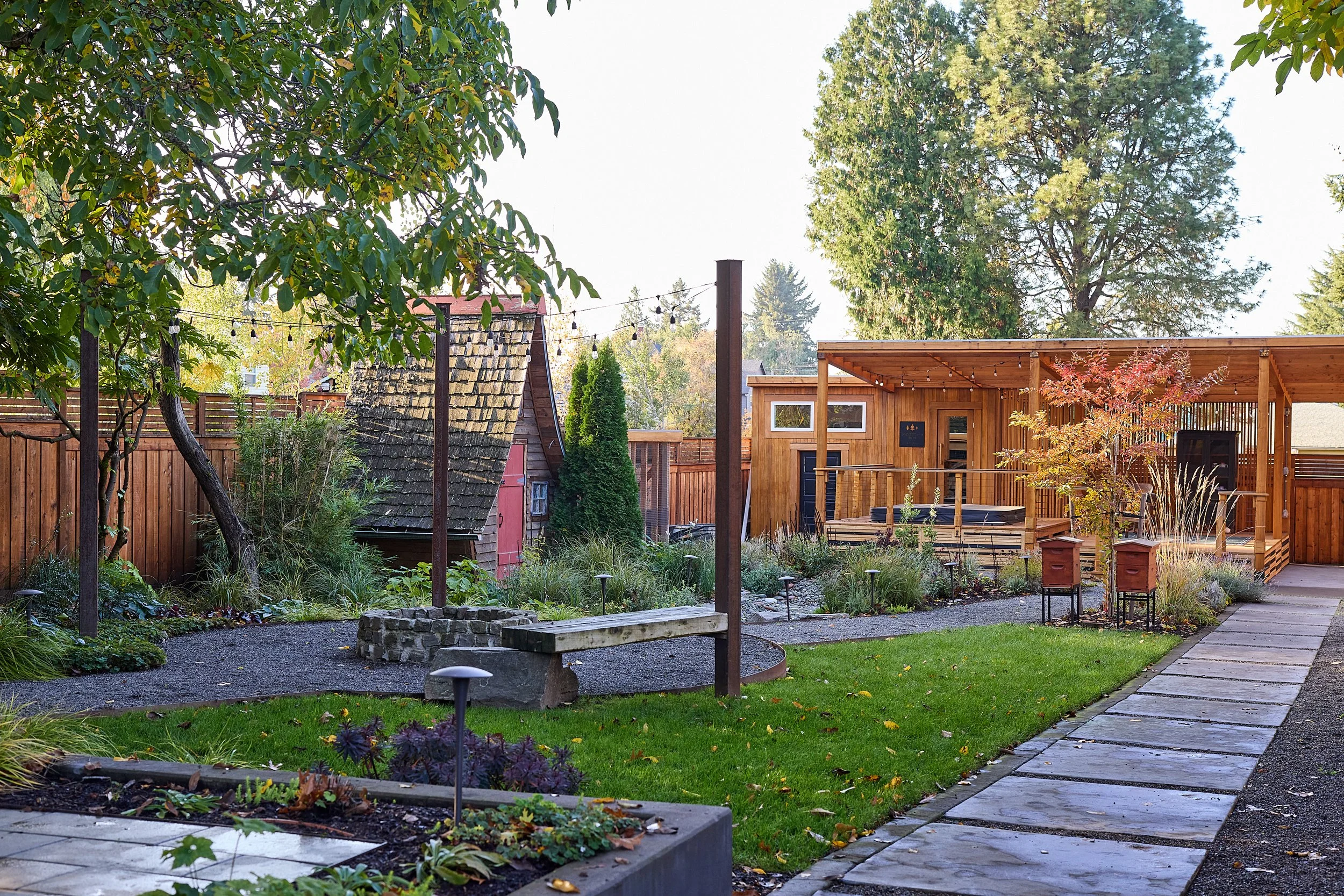
A Property That Heals Itself Over Time
The homeowners who invest in regenerative landscapes are not just buying a beautiful outdoor space. They are buying a property that gets better every year.
When grading and stormwater management are done well, the landscape becomes self-sustaining in ways that conventional landscapes never do. Native plants send roots four, six, eight feet into the ground, creating channels for water and air, building soil structure, reducing the need for irrigation as they tap into deeper moisture reserves.
Beneficial insects and pollinators find their way in. Soil biology improves season after season. The rain garden that looked simple in year one is lush and layered by year three. The swale that was barely noticeable has become a habitat corridor.
Your investment does not depreciate. It compounds.
And you get to live in it the whole time, watching your kids grow up in a yard that is genuinely alive, hosting the gatherings that happen naturally when the outdoor space invites them, waking up to a garden outside your window that restores you before your day begins.
That is the vision of your outdoor space you have been carrying in your mind. Getting the water right is how you make it last.
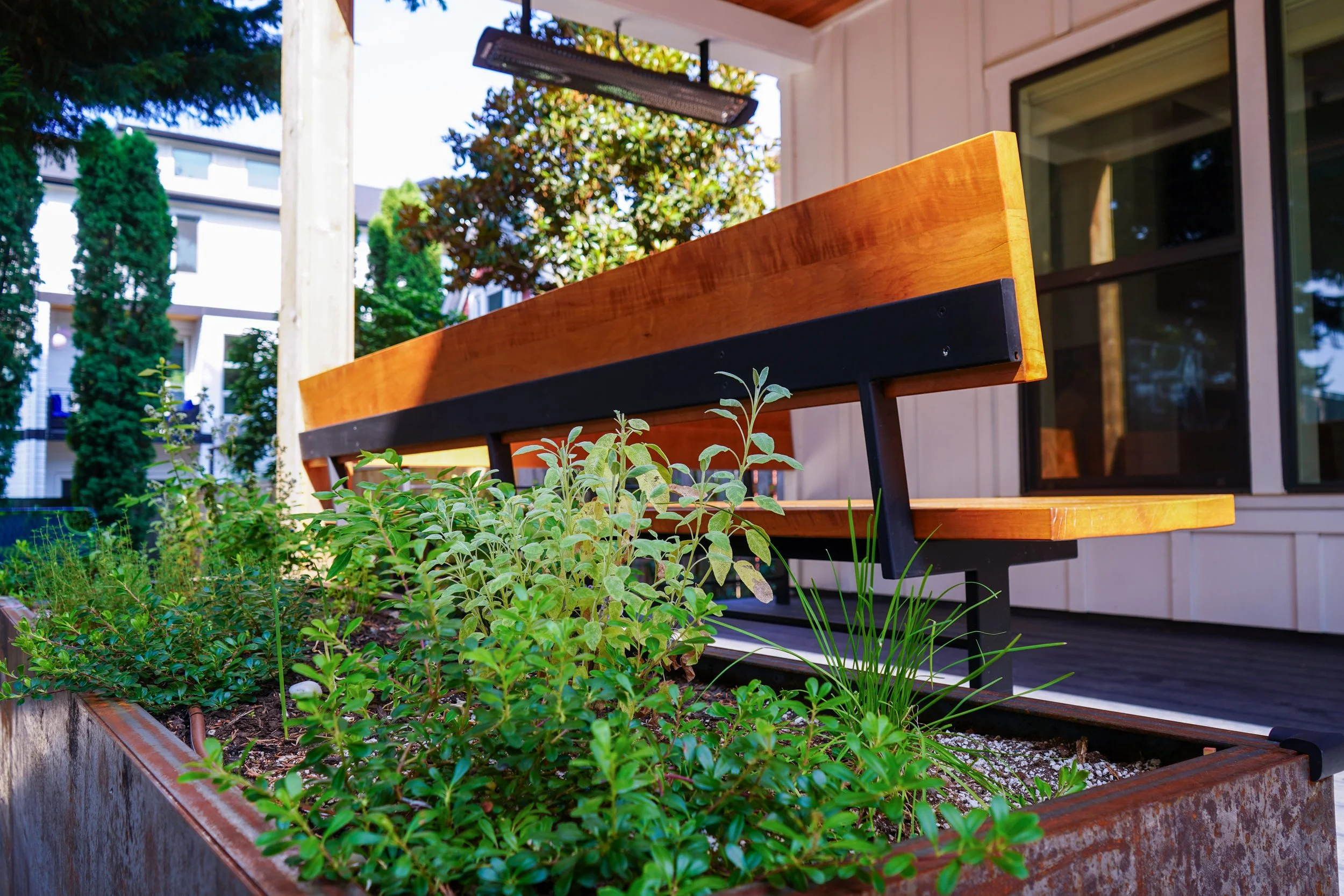
How to Know You Are Working with the Right Team
When you are ready to have this conversation with a landscape professional, here are the questions that will tell you whether a company truly understands what makes a landscape perform over time:
Do you assess the existing grading conditions on my site before designing anything?
Who is responsible for the grading decisions, and are they the same people overseeing construction?
Can you walk me through how you manage stormwater on a property like mine?
What happens when a grading call needs to be made on-site during the build?
Can I see examples of stormwater management features you have designed and built?
A company that gives you clear, confident answers understands that the landscape above the surface is only as good as what they did beneath it. That is the team you want holding your vision.
Your Version of This Is Closer Than You Think
The outdoor space you have been imagining is a design opportunity. The most important thing you can do to protect that investment, before you choose plants, before you finalize a design, before construction begins, is make sure the ground beneath it is set up to support everything you are building above it.
A Garden Chat is where we start. A relaxed 30-minute conversation, no pitch, no pressure, where we listen far more than we talk. We want to hear what you have been imagining: what your mornings and evenings outside could look like, what your family needs from that space. And we want to make sure that whatever we build for you is built to last.